

Herbal Medicine - Alder Buckthorn
Herbal Medicine – Alder Buckthorn
Botanical Information
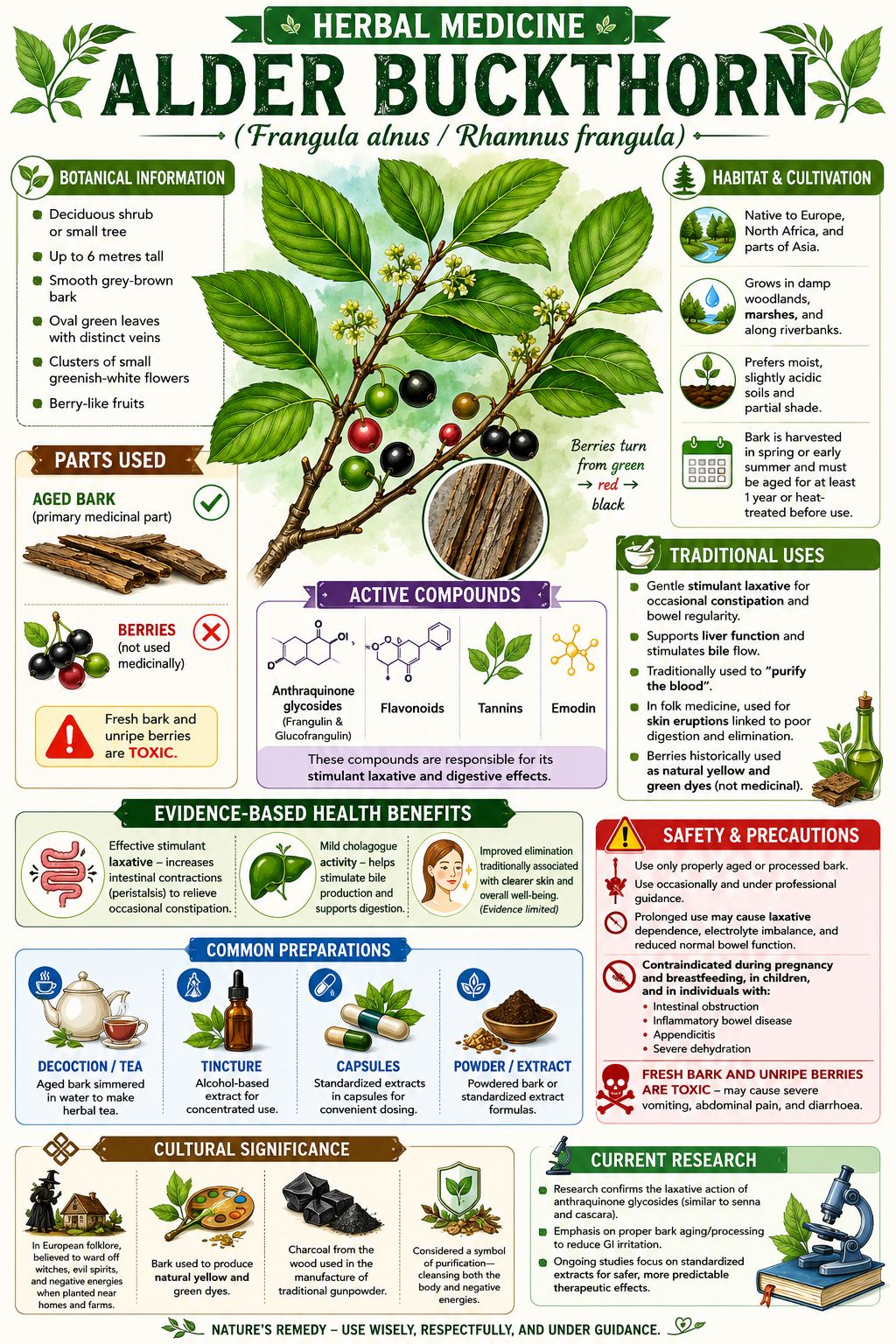
Alder Buckthorn (Rhamnus frangula), now more commonly classified as Frangula alnus, belongs to the Rhamnaceae family. It is a deciduous shrub or small tree that grows up to 6 metres tall. The plant features smooth grey-brown bark, oval green leaves with distinct veins, clusters of small greenish-white flowers, and berry-like fruits that change from green to red before ripening to glossy black.
Herbal Medicine - Alder
Herbal Medicine – Alder
Botanical Information
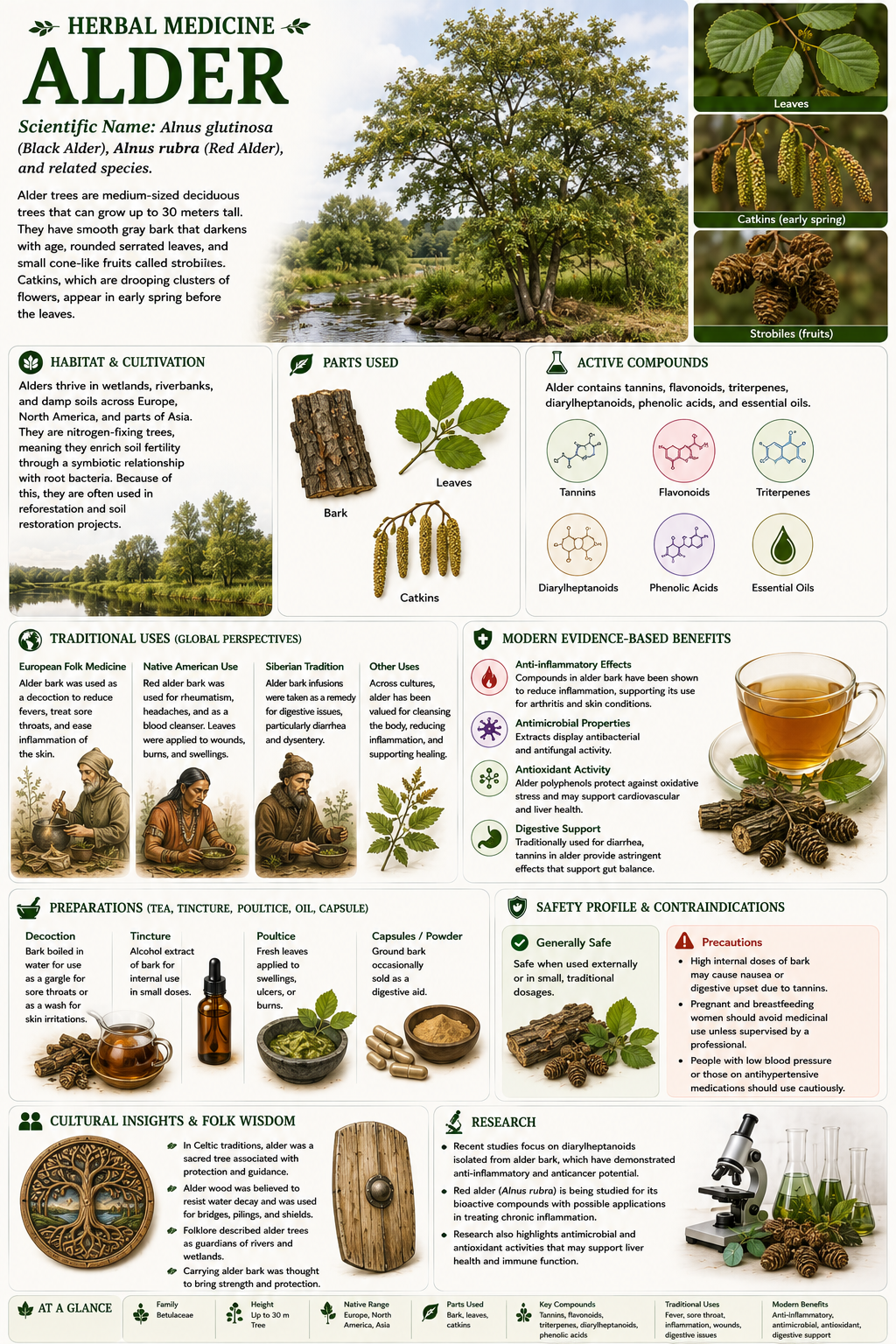
Alder (Alnus glutinosa), commonly known as Black Alder, along with related species such as Alnus rubra (Red Alder), belongs to the Betulaceae family. It is a medium-sized deciduous tree that can grow up to 30 metres tall. Alder is recognized by its smooth grey bark, rounded serrated leaves, drooping catkins that appear in early spring, and small woody cone-like fruits known as strobiles.
Herbal Medicine - Albizzia
Herbal Medicine – Albizzia
Botanical Information
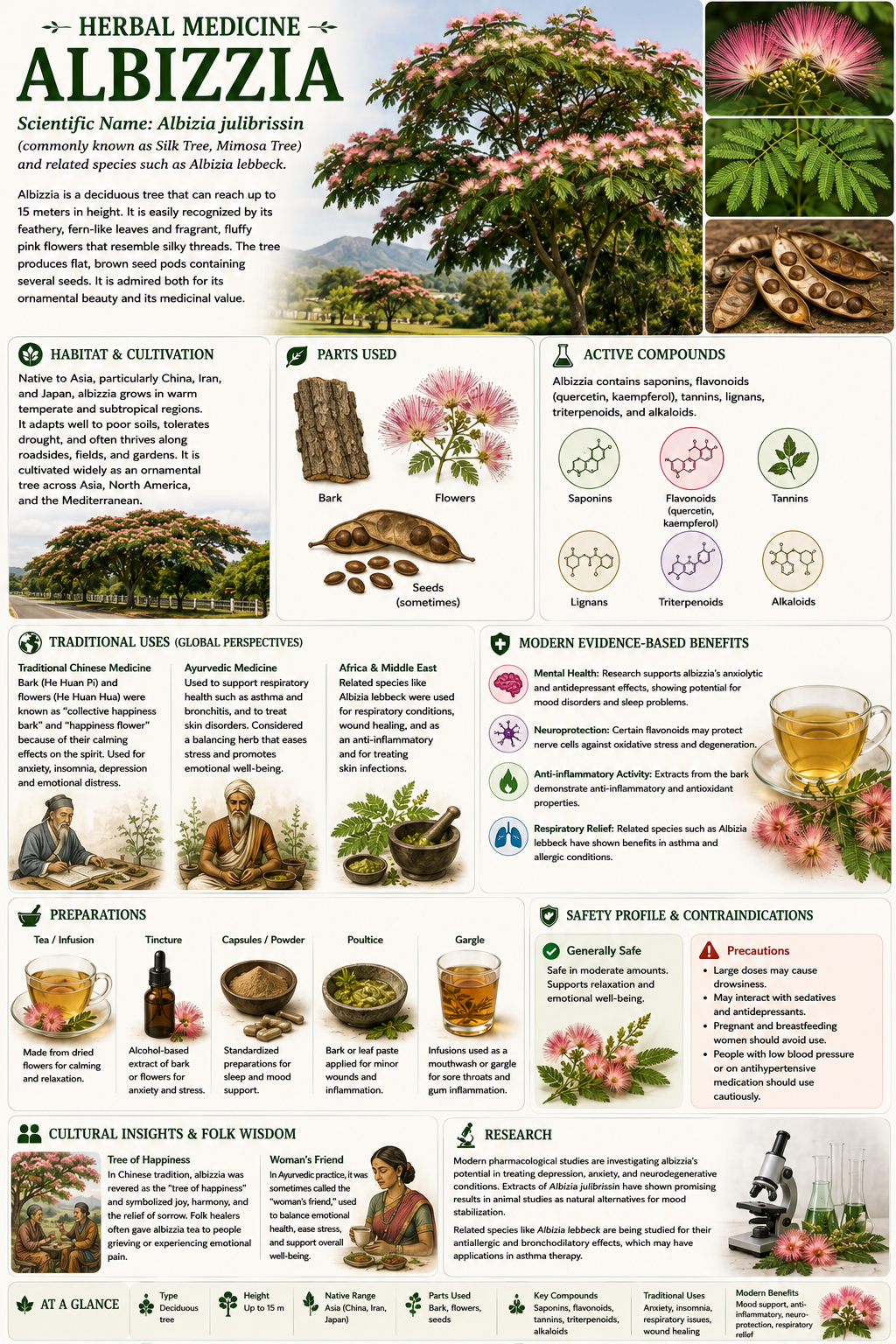
Albizzia (Albizia julibrissin), commonly known as the Silk Tree or Mimosa Tree, belongs to the Fabaceae family. Related medicinal species include Albizia lebbeck. It is a deciduous tree that can grow up to 15 metres tall, featuring graceful fern-like leaves, fragrant silky pink flowers, and flat brown seed pods containing several seeds. The tree is widely appreciated for both its ornamental beauty and traditional medicinal value.
Herbal Medicine - Agrimony
Herbal Medicine – Agrimony
Botanical Information
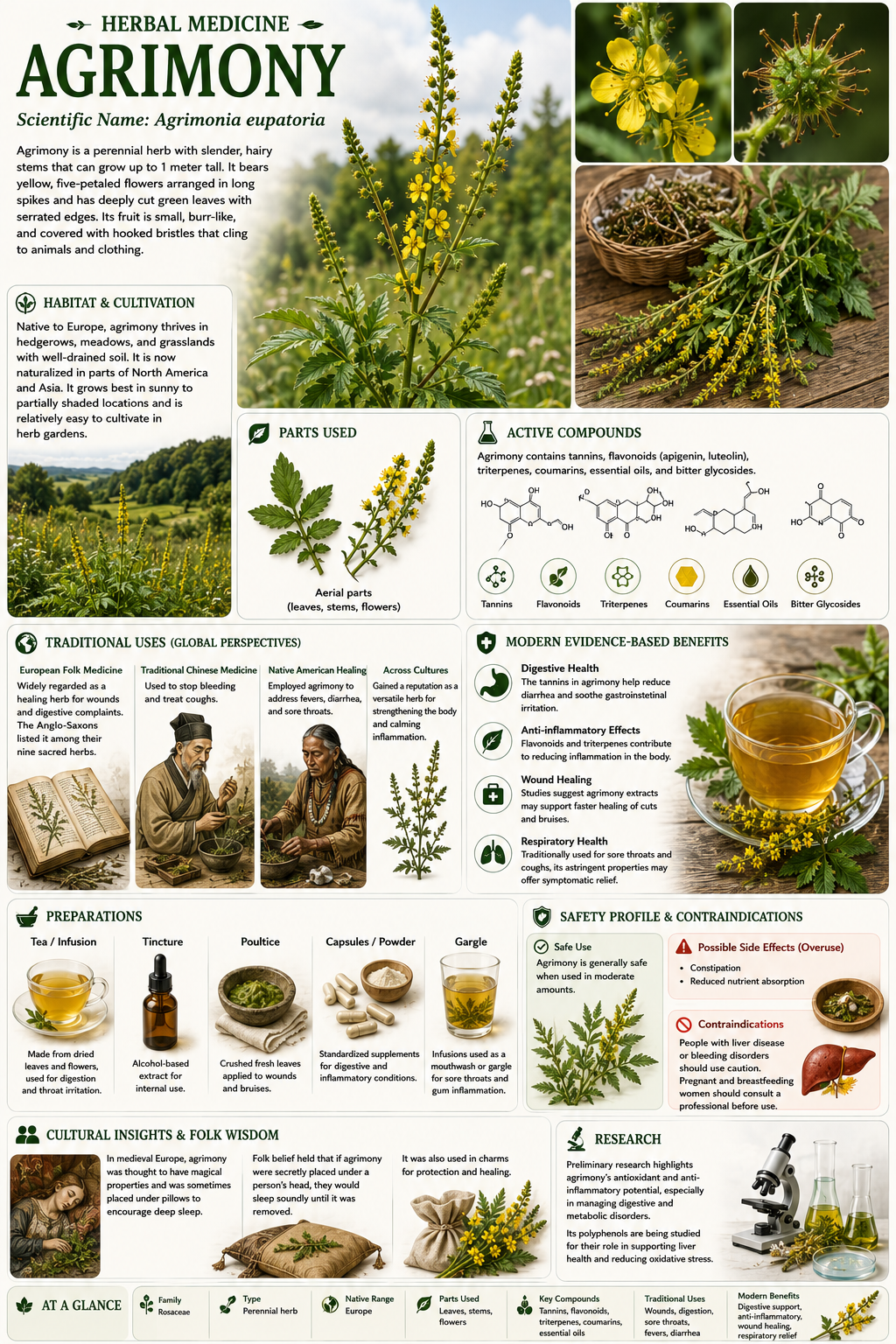
Agrimony (Agrimonia eupatoria) is a perennial herb belonging to the Rosaceae family. It grows up to 1 metre tall with slender, hairy stems, deeply serrated green leaves, and long spikes of bright yellow, five-petaled flowers. The small burr-like fruits are covered with hooked bristles that easily cling to clothing and animal fur, aiding seed dispersal.
Herbal Medicine - Agave
Herbal Medicine – Agave
Botanical Information
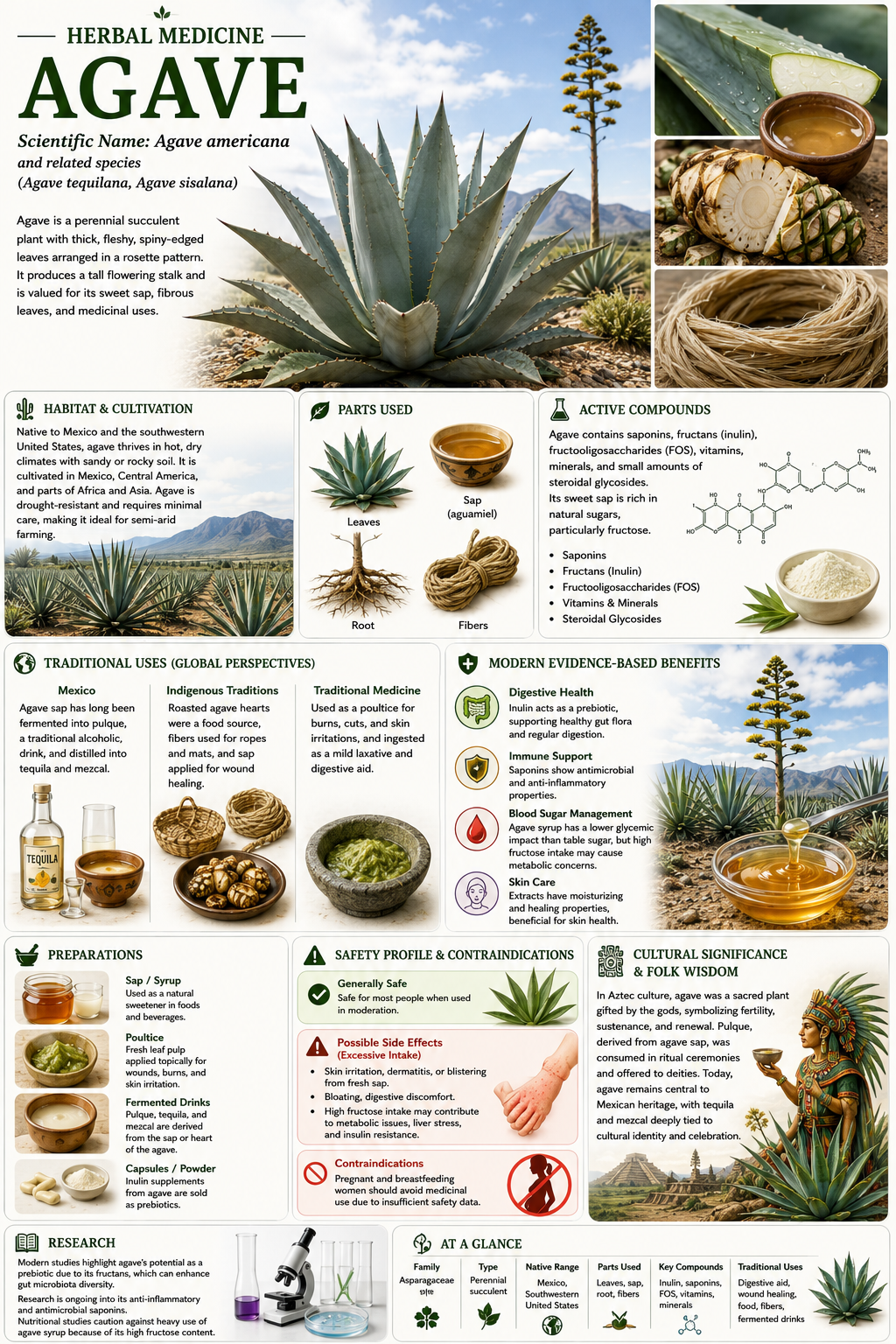
Agave (Agave americana) and related species, including Agave tequilana and Agave sisalana, belong to the Asparagaceae family. These perennial succulents are characterized by their thick, fleshy leaves arranged in a striking rosette pattern, with sharp spines along the edges and at the tips. Mature plants produce an impressive flowering stalk that can grow several metres high before completing their life cycle. Renowned for their resilience, agave plants thrive in harsh, arid environments and have long been valued for their sweet sap, strong fibres, and medicinal properties.
Herbal Medicine - Agar
Herbal Medicine – Agar
Botanical Information
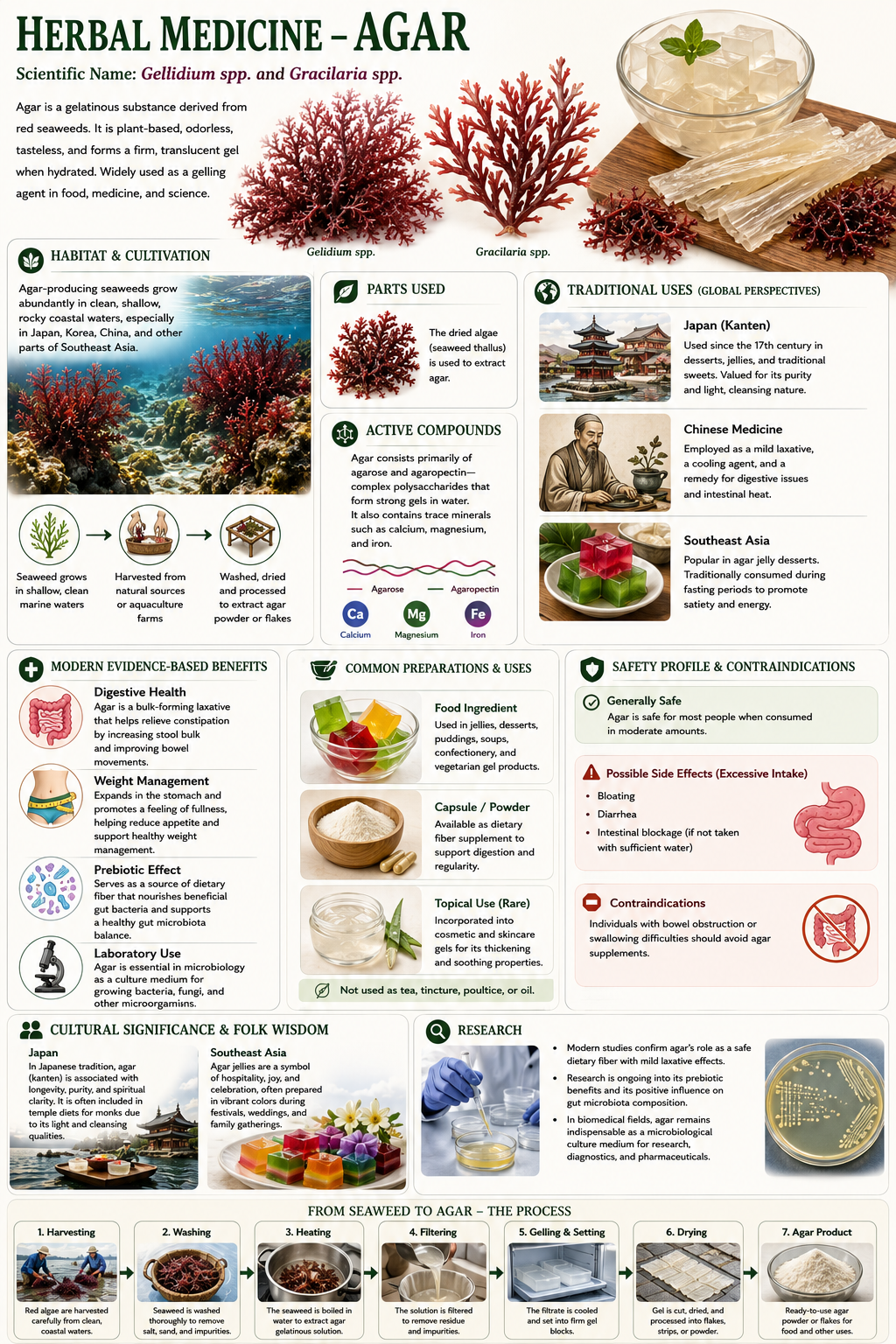
Agar is a natural gelatinous substance obtained from several species of red algae, primarily Gelidium spp. and Gracilaria spp. Unlike animal-derived gelatin, agar is completely plant-based, odourless, tasteless, and forms a firm, translucent gel when mixed with water. It has long been valued as both a food ingredient and a functional material due to its excellent gelling properties.
Herbal Medicine - Aconite
Herbal Medicine – Aconite
Botanical Information
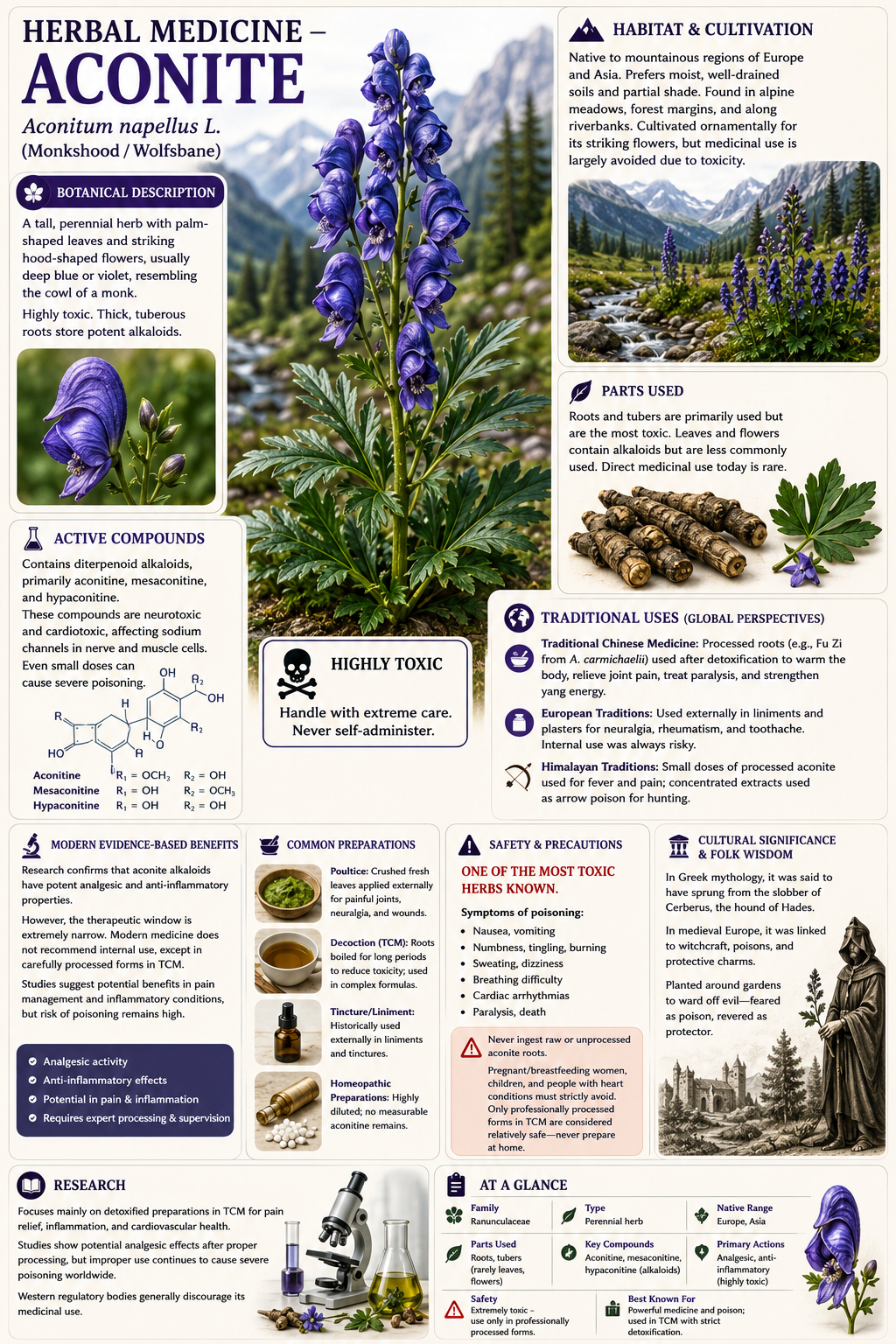
Aconite (Aconitum napellus L.), commonly known as Monkshood or Wolfsbane, belongs to the Ranunculaceae family. It is a tall perennial herb distinguished by its deeply divided, palm-shaped leaves and striking hood-shaped flowers that are usually deep blue or violet, resembling a monk’s cowl. Although admired for its ornamental beauty, Aconite is considered one of the most poisonous plants in the world. Its thick, tuberous roots contain highly potent alkaloids that have historically been used both medicinally and as deadly poisons.
Herbal Medicine - Acanthus
Herbal Medicine – Acanthus
Botanical Information
Acanthus (Acanthus mollis L.), commonly known as Bear’s Breeches, belongs to the Acanthaceae family. Other medicinally recognized species include Acanthus spinosus L. It is a striking perennial plant distinguished by its large, glossy, deeply lobed dark green leaves and tall flower spikes bearing white to purple blossoms with hood-like bracts. Beyond its medicinal value, Acanthus has been admired for centuries as an ornamental plant and is famously represented in the elaborate Corinthian columns of ancient Greek architecture.
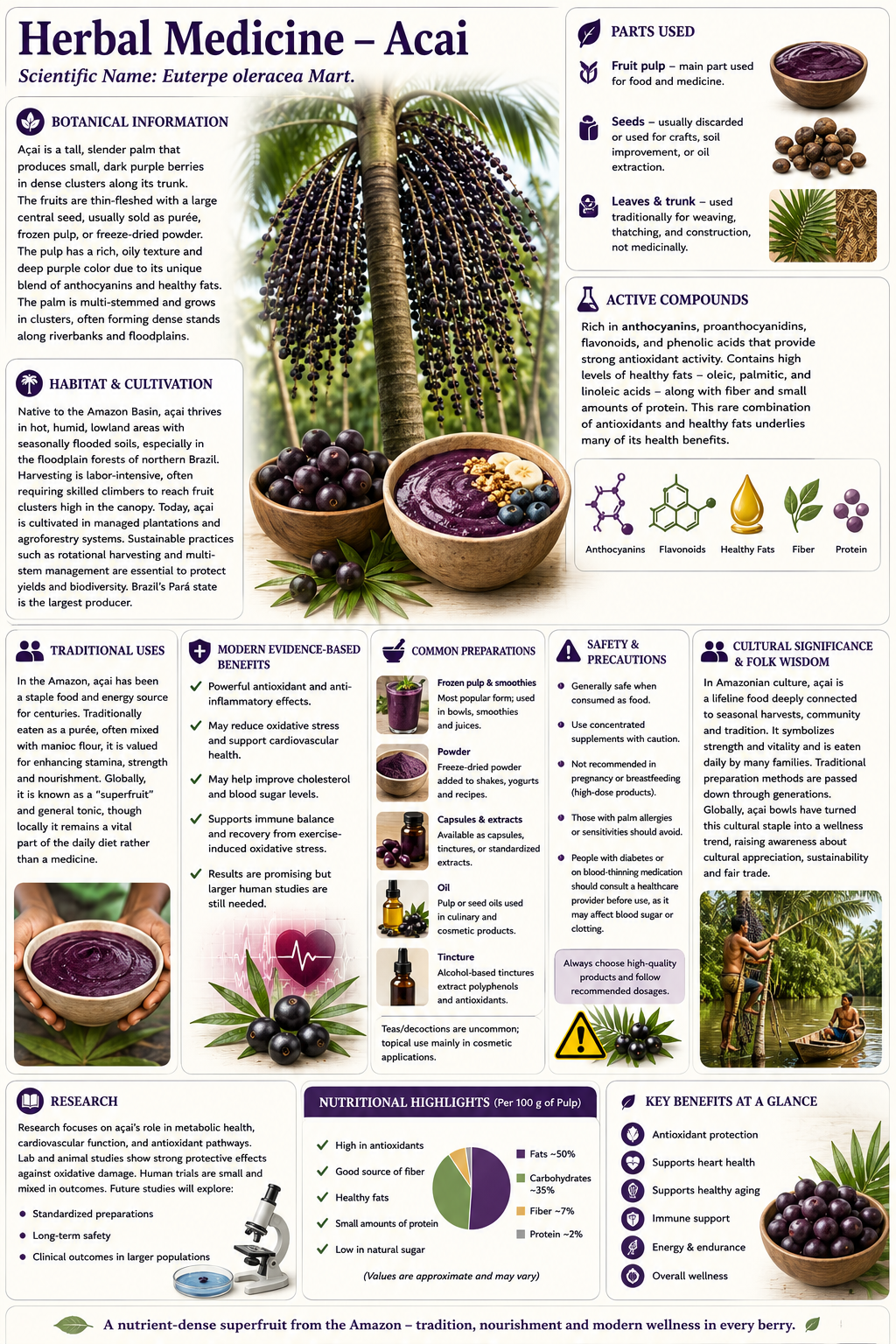
Herbal Medicine - Acai
Herbal Medicine – Acai
Botanical Information
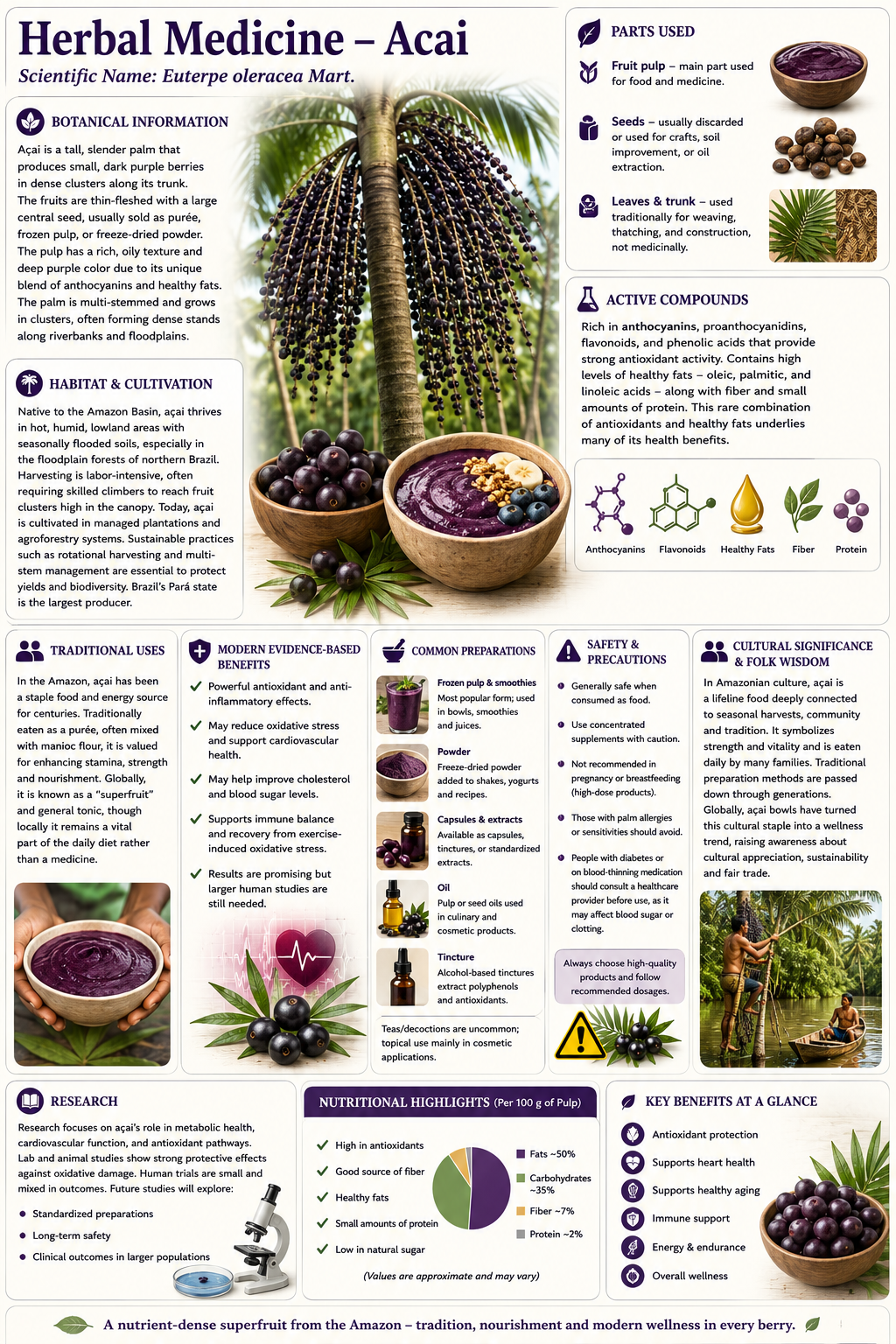
Açai (Euterpe oleracea Mart.) is a tall, slender palm belonging to the Arecaceae family. It produces clusters of small, dark purple berries that grow directly from the trunk. Each berry contains a large central seed with only a thin layer of edible pulp, which is why açai is commonly processed into frozen pulp, purée, or freeze-dried powder rather than eaten fresh. The pulp has a rich, creamy texture and a deep purple colour, attributed to its abundance of anthocyanins and healthy fats. The palm is naturally multi-stemmed, forming dense clumps along riverbanks and floodplains.