

Essential Oil - Cumin
Essential Oil – Cumin
Botanical Information
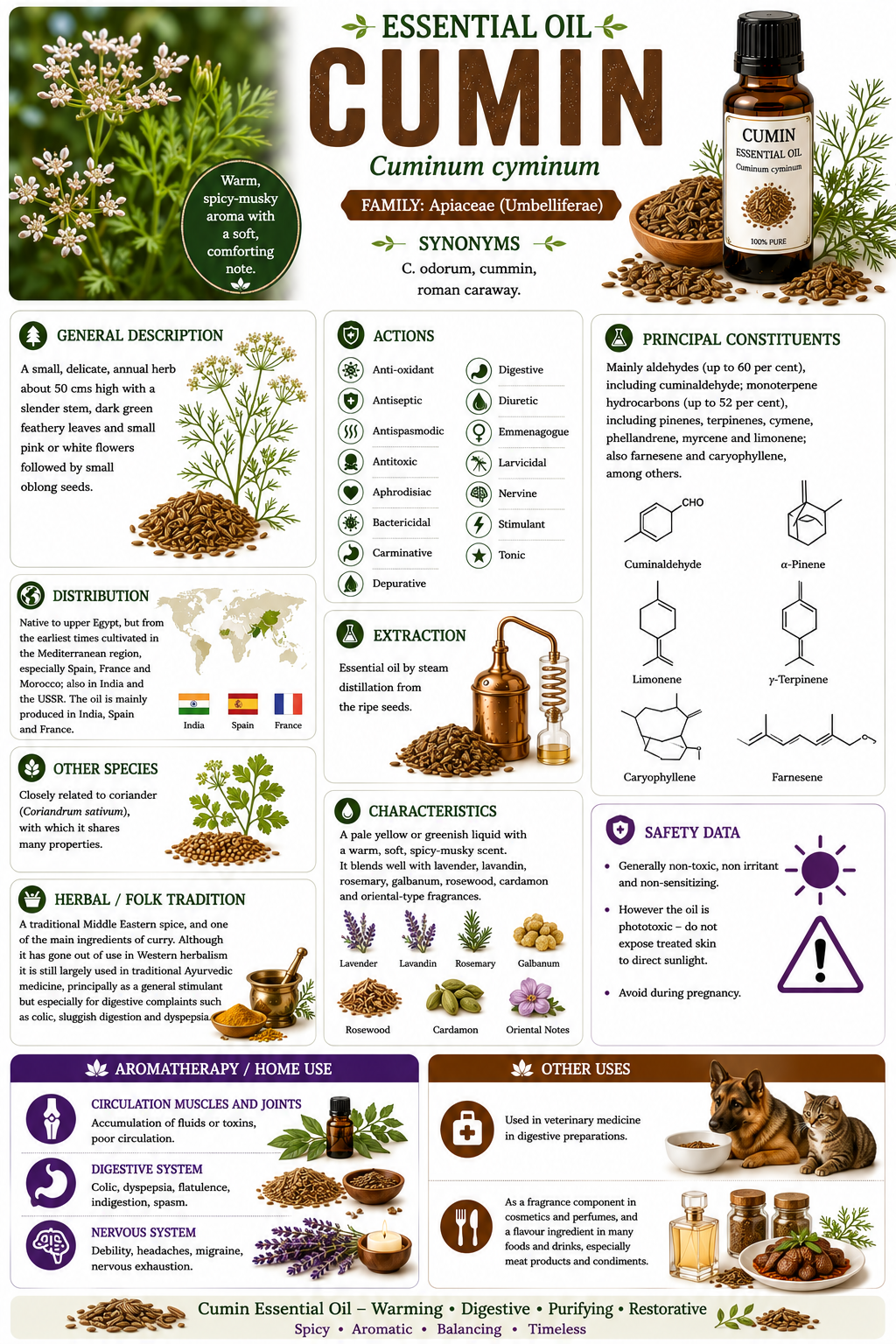
Cumin (Cuminum cyminum), also known as Cummin, Roman Caraway, or C. odorum, belongs to the Apiaceae (Umbelliferae) family. It is a delicate annual herb that typically grows to about 50 cm in height. The plant features slender stems, finely divided dark green feathery leaves, and clusters of small pink or white flowers that develop into elongated aromatic seeds, which are the source of its essential oil.
Essential Oil - Cubebs
Essential Oil – Cubebs
Botanical Information
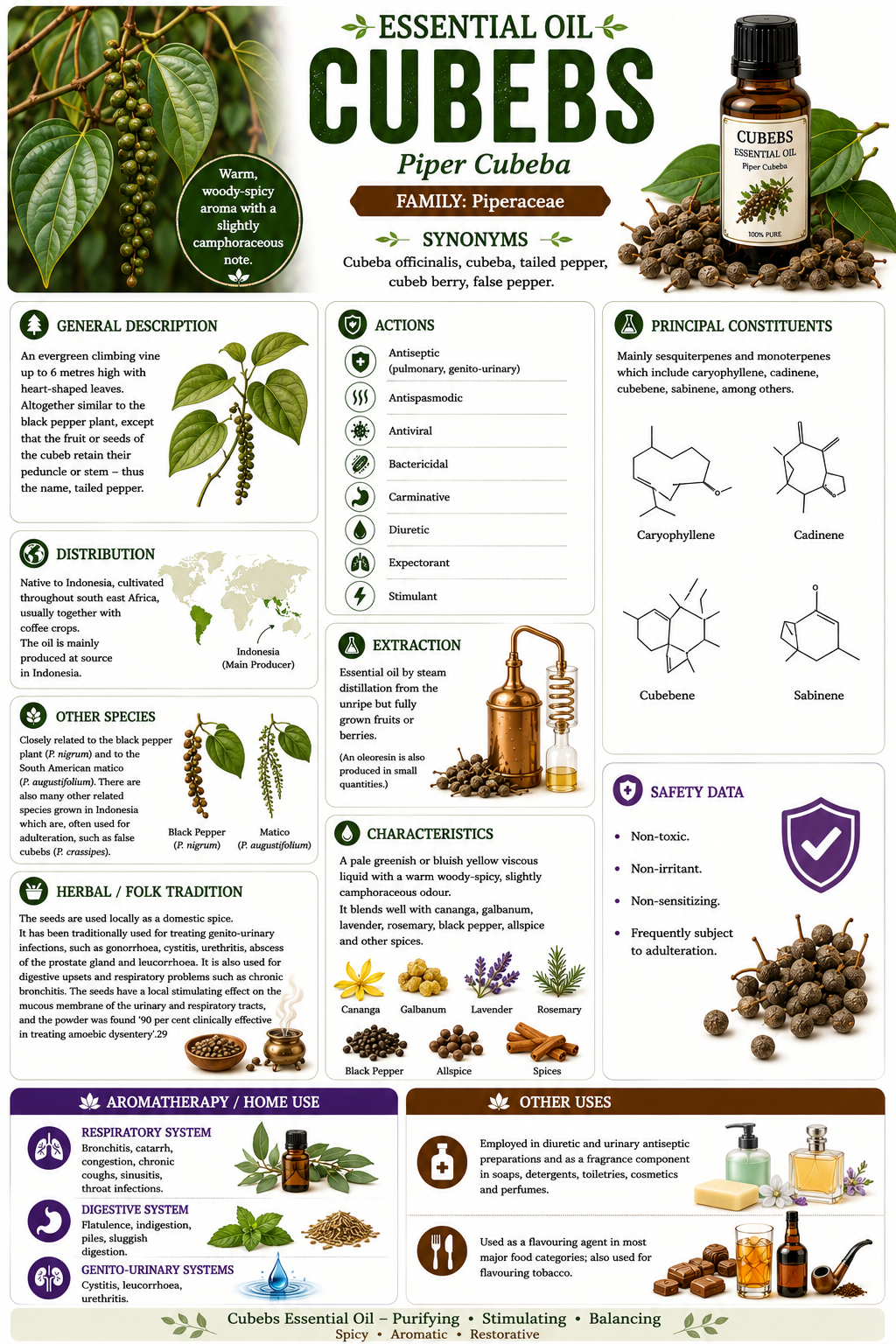
Cubebs (Piper cubeba), also known as Cubeba officinalis, Cubeb, Tailed Pepper, Cubeb Berry, or False Pepper, belongs to the Piperaceae family. It is an evergreen climbing vine that can reach up to 6 metres in height. The plant closely resembles black pepper, with heart-shaped leaves and clusters of berries. Unlike black pepper, however, each cubeb berry retains its small stalk or peduncle when harvested, giving rise to its common name, “tailed pepper.”
Essential Oil - Costus
Essential Oil – Costus
Botanical Information
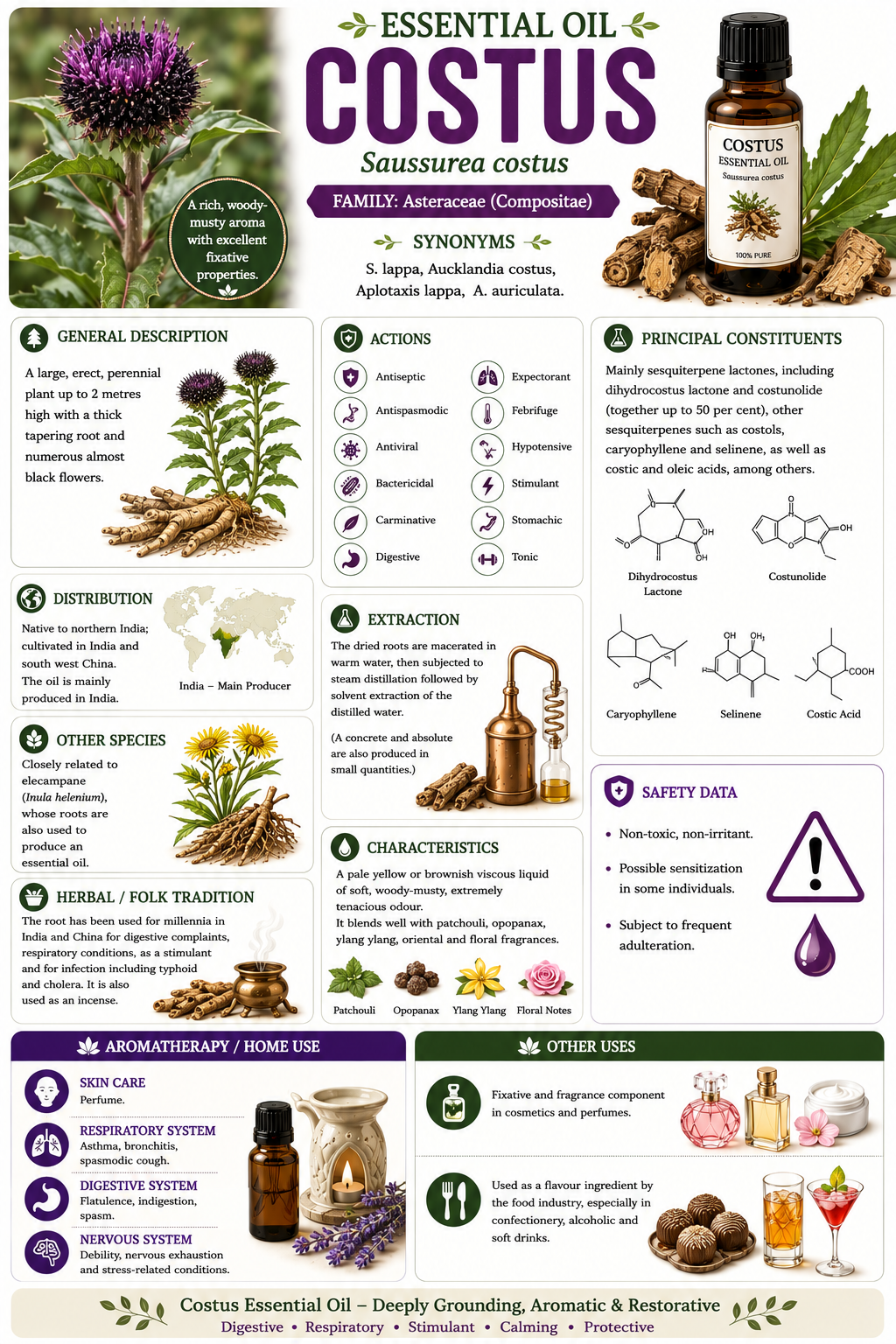
Costus (Saussurea costus), formerly known as Saussurea lappa, belongs to the Asteraceae (Compositae) family. It is also known by the botanical synonyms Aucklandia costus, Aplotaxis lappa, and Aplotaxis auriculata. This robust perennial herb grows up to 2 metres tall and is characterized by its thick, tapering aromatic root and clusters of dark purple to nearly black flowers. The root is the primary source of its highly valued essential oil.
Essential Oil - Coriander
Essential Oil – Coriander
Botanical Information
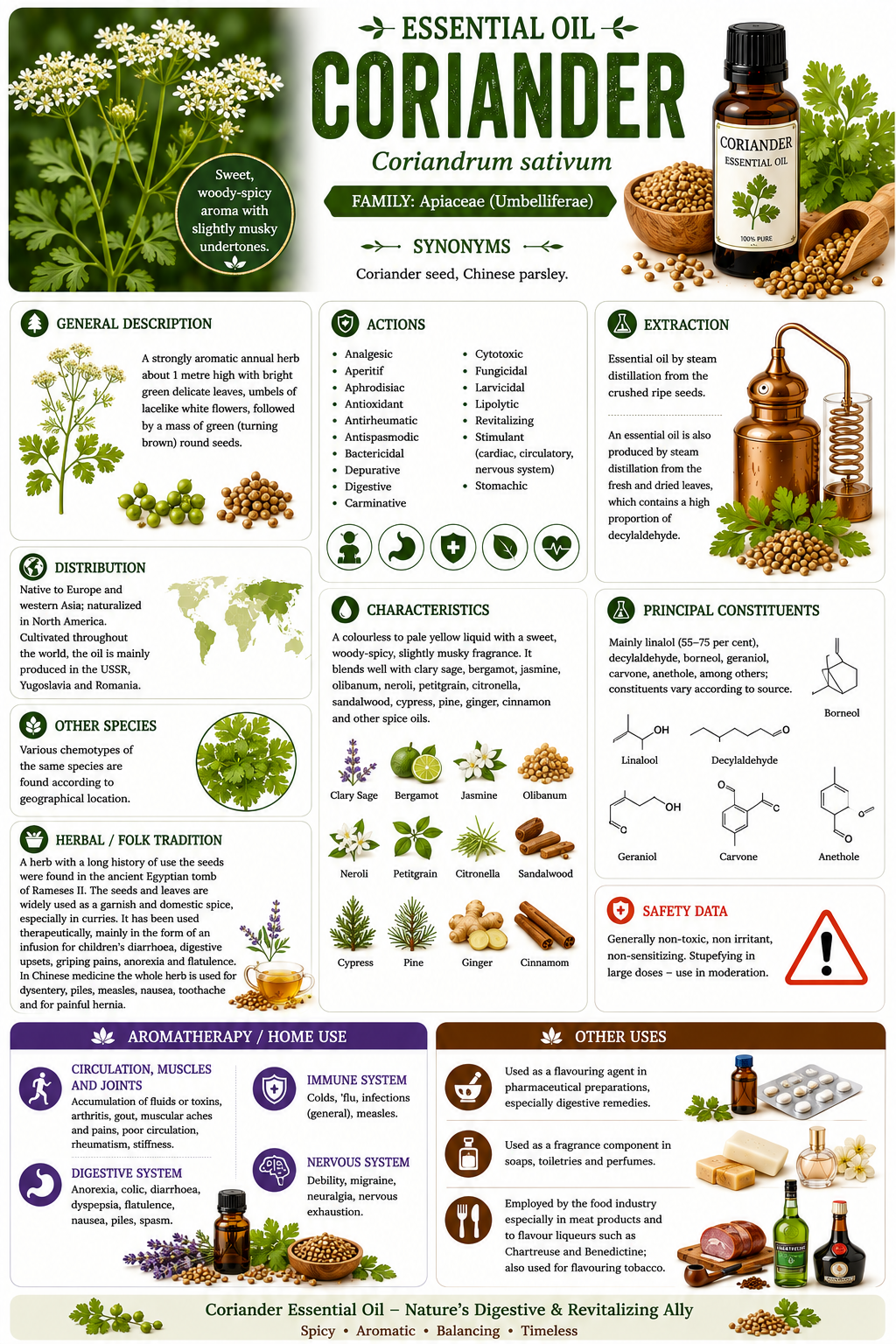
Coriander (Coriandrum sativum), commonly known as Chinese Parsley or Coriander Seed, belongs to the Apiaceae (Umbelliferae) family. It is a strongly aromatic annual herb that grows to about 1 metre in height. The plant has delicate bright green leaves, clusters of small white lace-like flowers, and round green fruits that mature into brown seeds. Both the leaves and seeds are highly valued for their distinctive aroma and culinary versatility.
Essential Oil - Clove
Essential Oil – Clove
Botanical Information
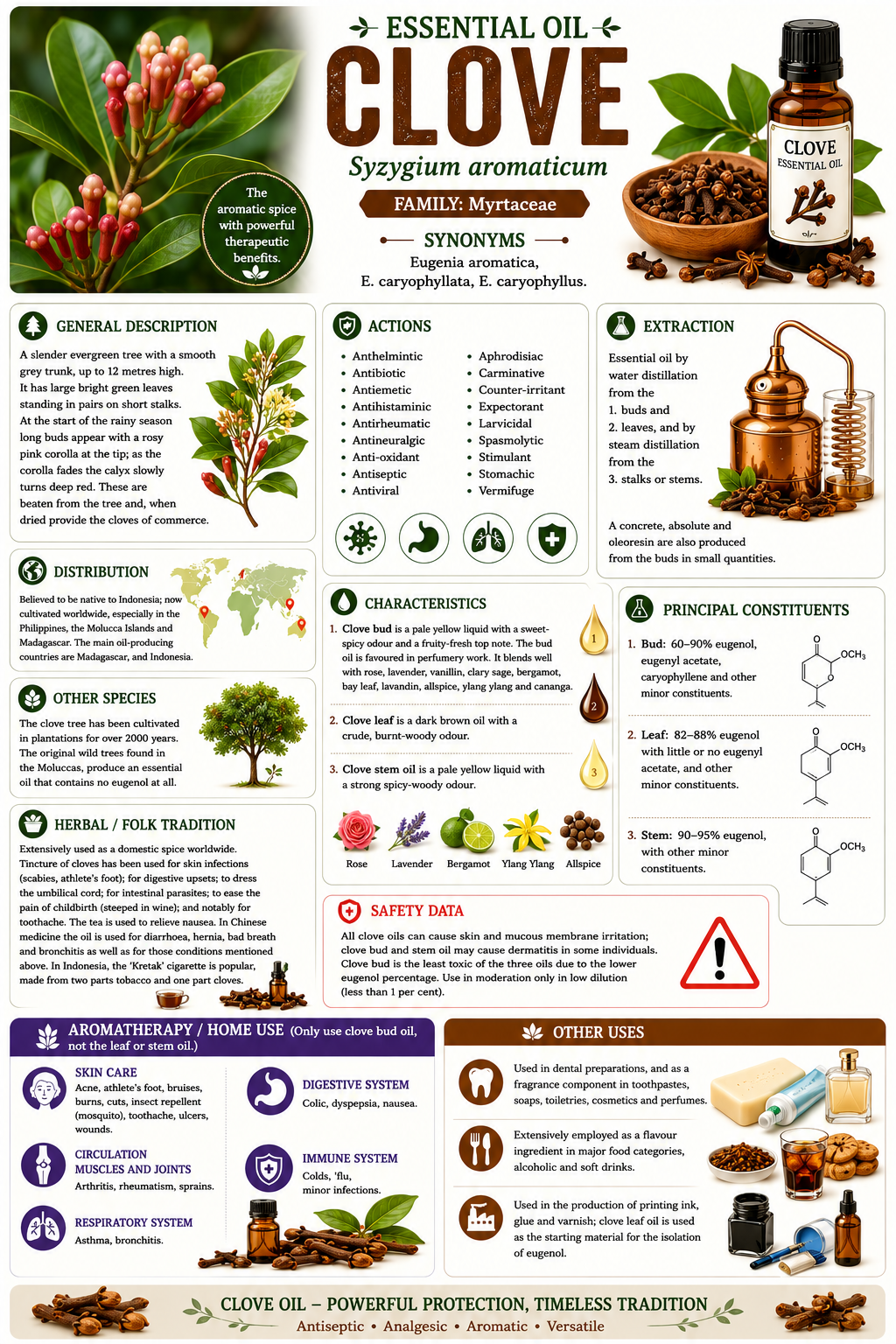
Clove (Syzygium aromaticum), formerly classified as Eugenia aromatica or Eugenia caryophyllata, belongs to the Myrtaceae family. It is an evergreen tree that grows up to 12 metres tall, with a smooth grey trunk and large, glossy green leaves arranged in opposite pairs. During the rainy season, the tree produces clusters of flower buds with rosy-pink petals. As the petals fall, the calyx gradually turns deep red, and these unopened flower buds are harvested and dried to produce the cloves commonly used as a spice.
Essential Oil - Citronella
Essential Oil – Citronella
Botanical Information
Citronella (Cymbopogon nardus) belongs to the Poaceae (Gramineae) family and is also known as Sri Lanka Citronella or Lenabatu Citronella. This tall, aromatic perennial grass originated from the wild “mana grass” of Sri Lanka. It forms dense clumps of slender green leaves that release a fresh, lemon-like fragrance when crushed, making it one of the world’s best-known aromatic grasses.
Essential Oil - Cinnamon
Essential Oil – Cinnamon
Botanical Information
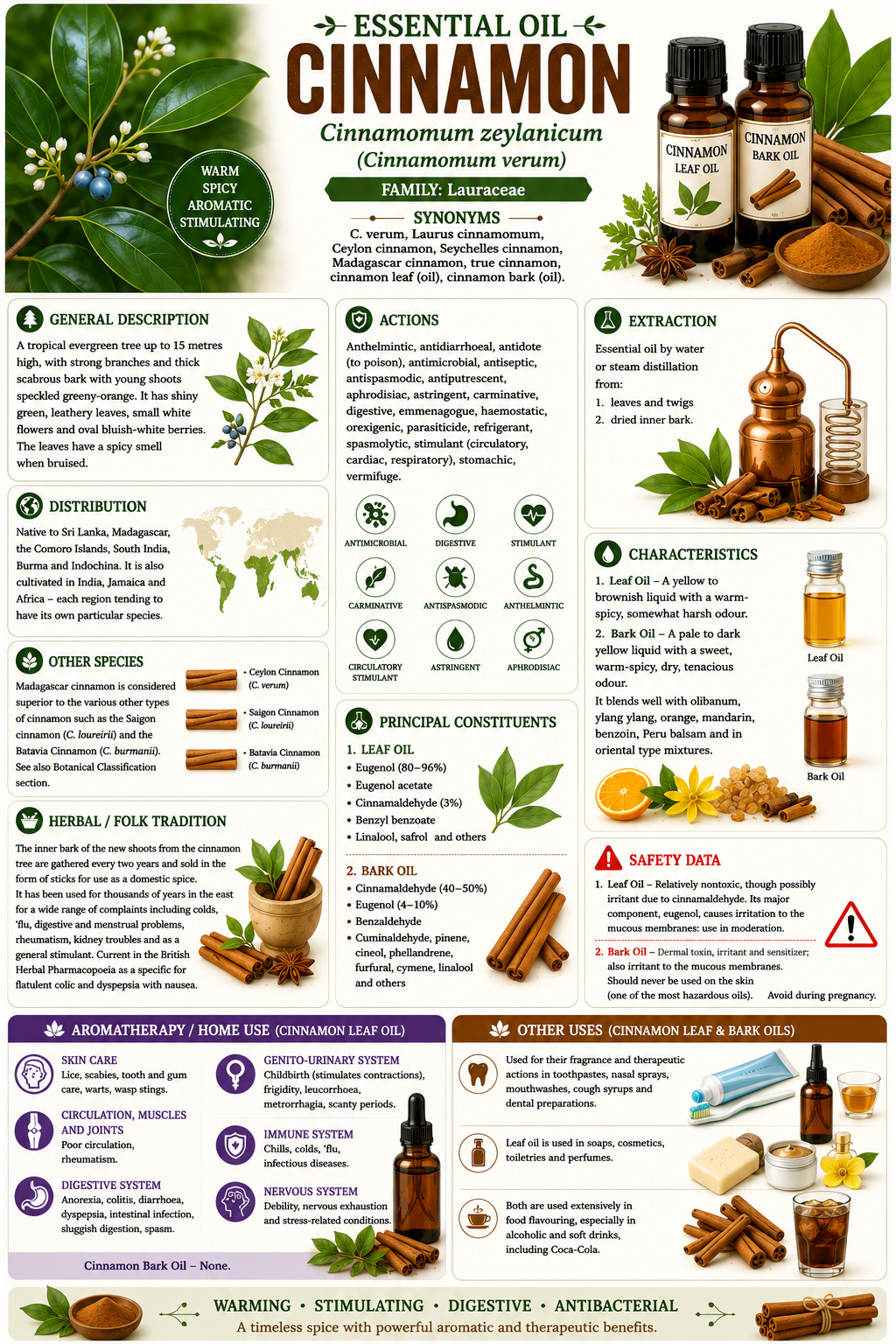
Cinnamon (Cinnamomum zeylanicum), now more commonly classified as Cinnamomum verum, belongs to the Lauraceae family. It is also known as Ceylon Cinnamon, True Cinnamon, Seychelles Cinnamon, and Madagascar Cinnamon. This tropical evergreen tree can grow up to 15 metres tall and features sturdy branches, rough aromatic bark, glossy leathery leaves, small white flowers, and bluish-white berries. When crushed, the leaves release a warm, spicy fragrance that is characteristic of cinnamon.
Essential Oil - Chervil
Essential Oil – Chervil
Botanical Information
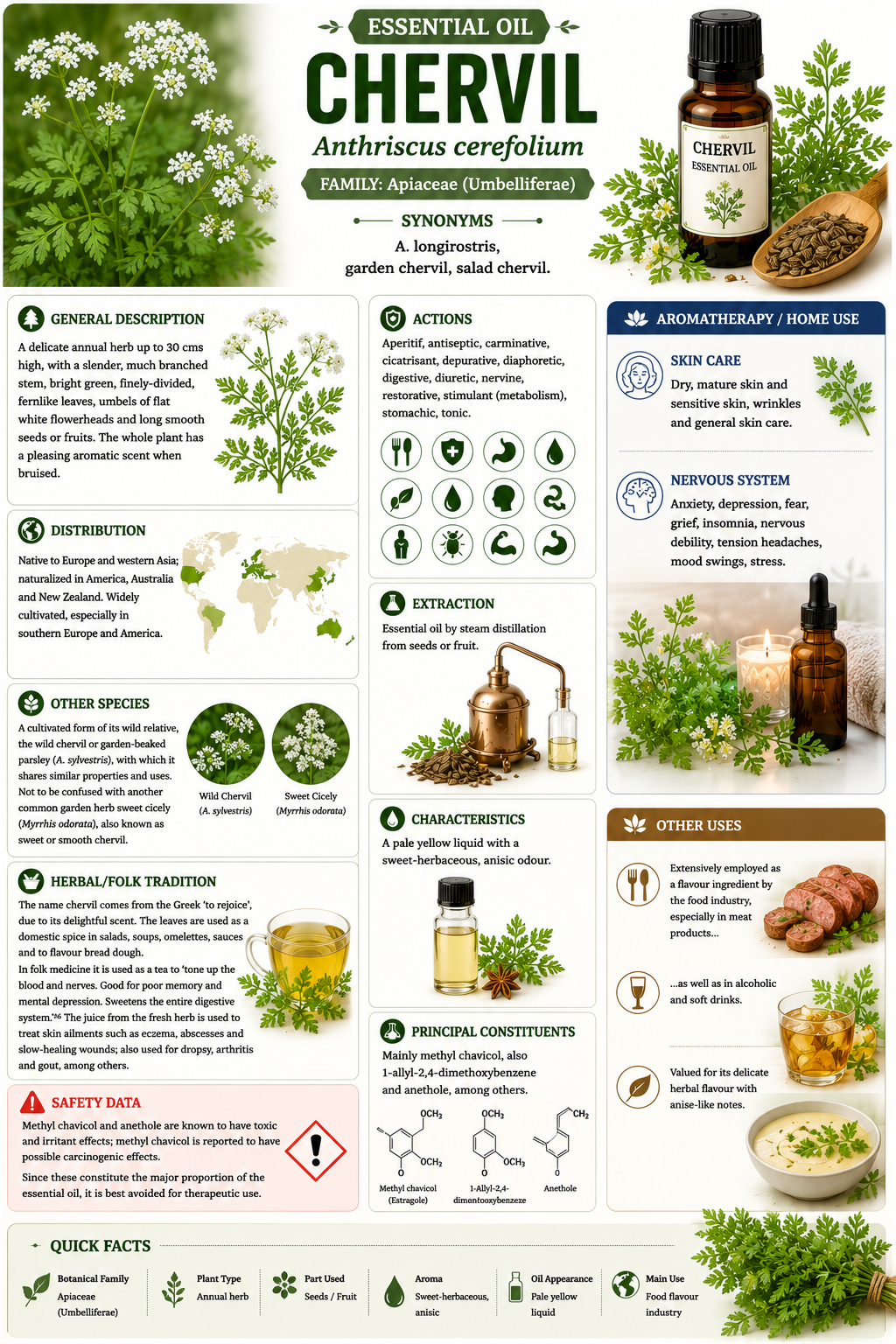
Chervil (Anthriscus cerefolium) belongs to the Apiaceae (Umbelliferae) family. It is also known as Garden Chervil or Salad Chervil. This delicate annual herb grows to about 30 cm in height and features slender branching stems, finely divided fern-like bright green leaves, clusters of tiny white flowers arranged in umbels, and smooth elongated seeds. When crushed, the entire plant releases a pleasant, sweet herbal aroma.
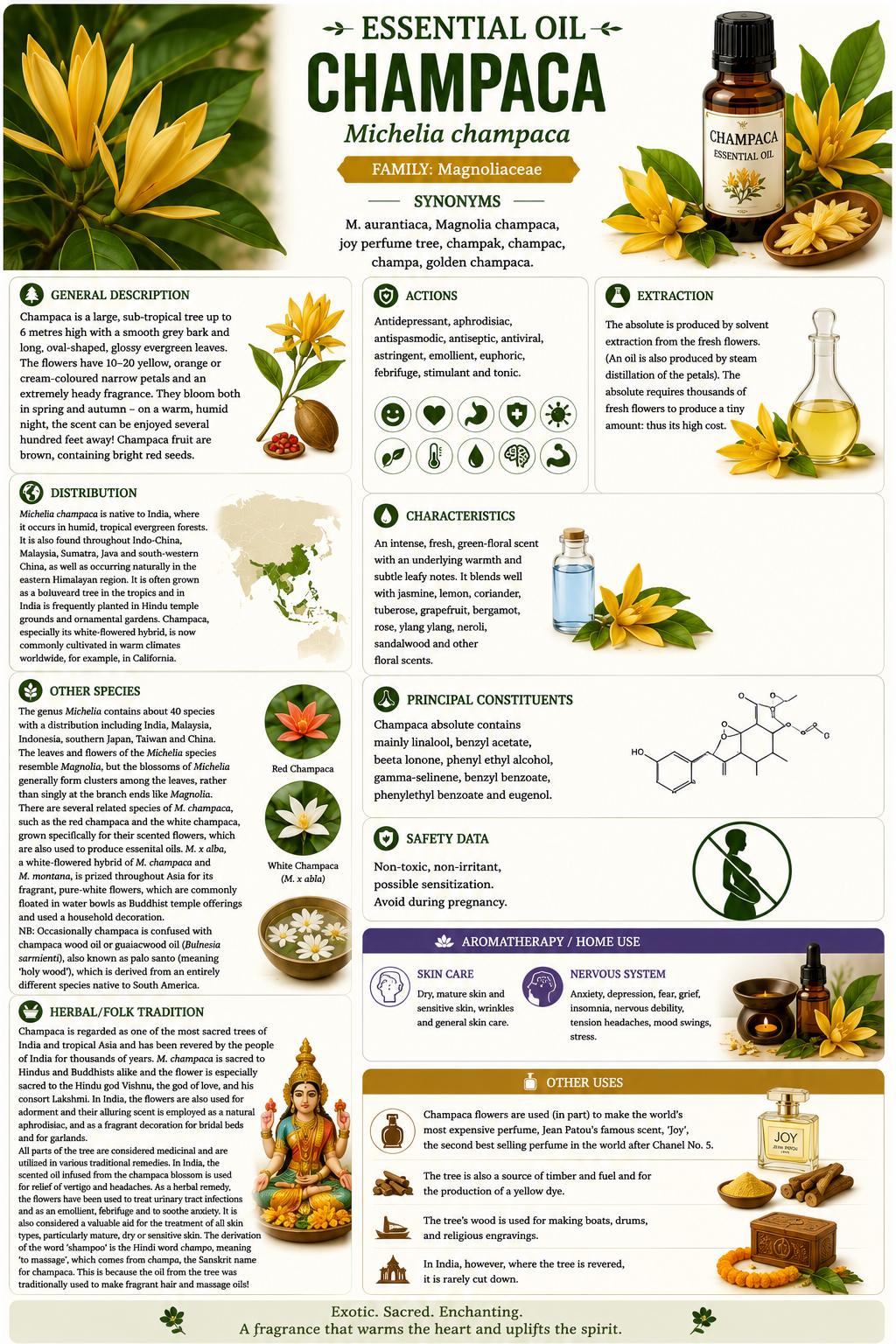
Essential Oil- Champaca
Essential Oil – Champaca
Botanical Information
Champaca (Michelia champaca), also known as Magnolia champaca, belongs to the Magnoliaceae family. Common names include Golden Champaca, Champak, Champa, Joy Perfume Tree, and Champac. It is a graceful evergreen tree that typically grows up to 6 metres tall, with smooth grey bark, glossy oval leaves, and highly fragrant yellow, orange, or cream-colored flowers. Each blossom contains 10–20 narrow petals and releases an intensely rich floral fragrance that can travel hundreds of feet on warm, humid evenings. The tree also produces brown fruits containing bright red seeds.
Habitat and Cultivation
Champaca is native to India, where it grows naturally in humid tropical evergreen forests. It is also found throughout Indochina, Malaysia, Sumatra, Java, southwestern China, and the eastern Himalayan region. Today it is widely cultivated across tropical and subtropical regions, often planted as an ornamental tree in parks, gardens, and temple grounds. In India, it is especially revered and commonly grown near Hindu temples, while white-flowered hybrids are increasingly cultivated in warm climates worldwide, including California.
Essential Oil - Roman Chamomile
Essential Oil – Chamomile (Roman)
Botanical Information
Roman Chamomile (Chamaemelum nobile), formerly known as Anthemis nobilis, belongs to the Asteraceae (Compositae) family. It is also commonly called English Chamomile, Garden Chamomile, Sweet Chamomile, and True Chamomile. This low-growing perennial herb typically reaches 25 cm in height and has creeping, branching stems covered with fine hairs. Its feathery green leaves and larger white daisy-like flowers distinguish it from German Chamomile, while the entire plant releases a pleasant apple-like fragrance when crushed.
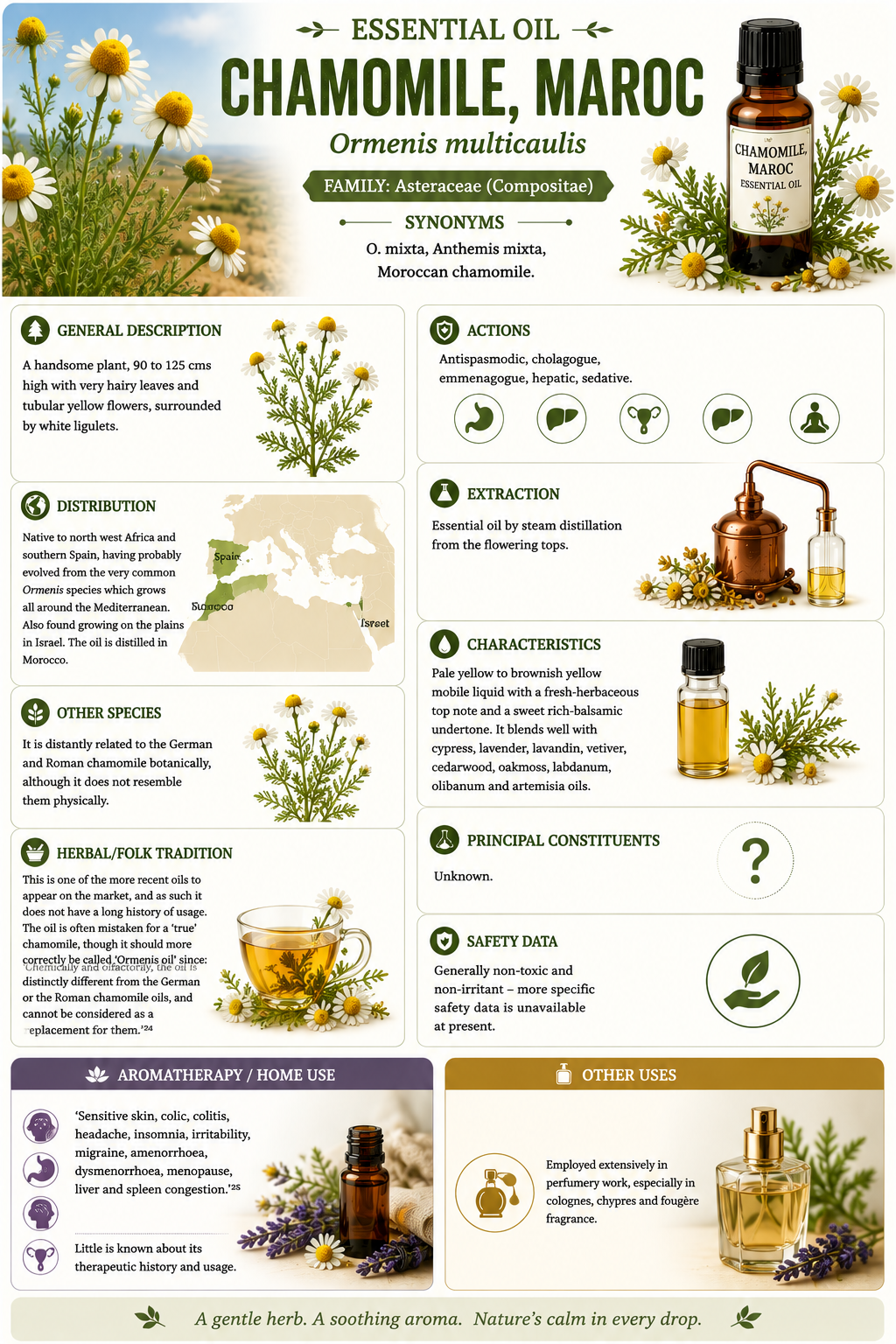
Essential Oil - Chamomile Maroc
Essential Oil – Chamomile (Maroc)
Botanical Information
Chamomile Maroc (Ormenis multicaulis), also known as Ormenis mixta, Anthemis mixta, or Moroccan Chamomile, belongs to the Asteraceae (Compositae) family. This attractive annual herb grows between 90 and 125 cm tall and is distinguished by its finely hairy foliage and bright yellow tubular flowers surrounded by white ray petals. Although commonly referred to as a chamomile, it differs significantly from both German and Roman Chamomile in appearance, aroma, and chemical composition.
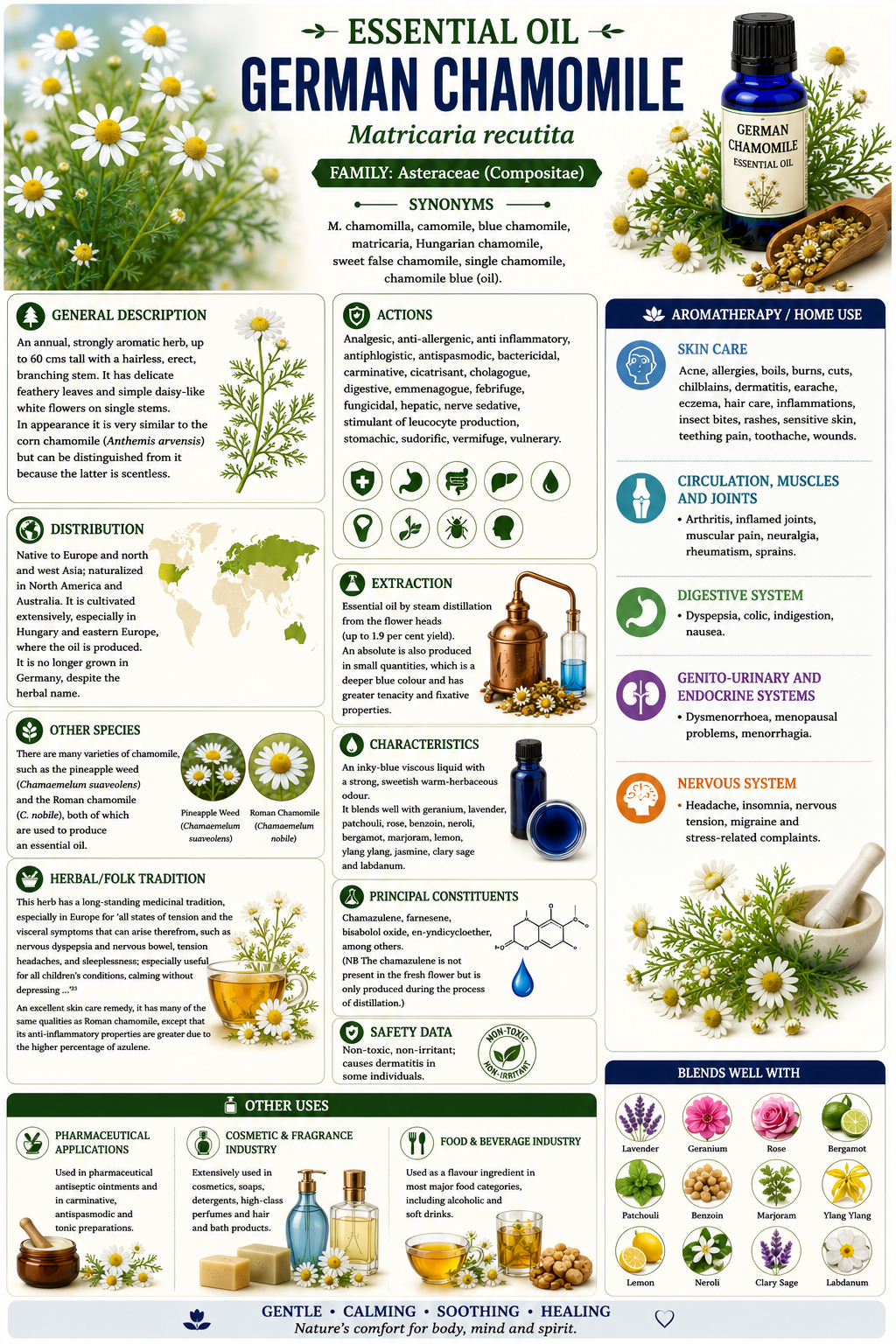
Essential Oil - German Chamomile
Essential Oil – German Chamomile
Botanical Information
German Chamomile (Matricaria recutita), also known as Matricaria chamomilla, belongs to the Asteraceae (Compositae) family. Common names include Blue Chamomile, Hungarian Chamomile, Sweet False Chamomile, Single Chamomile, and Chamomile Blue Oil. This fragrant annual herb grows up to 60 cm tall and features slender branching stems, finely divided feathery leaves, and delicate white daisy-like flowers with yellow centers. Although it closely resembles Corn Chamomile (Anthemis arvensis), German Chamomile can easily be identified by its distinctive sweet herbal aroma.
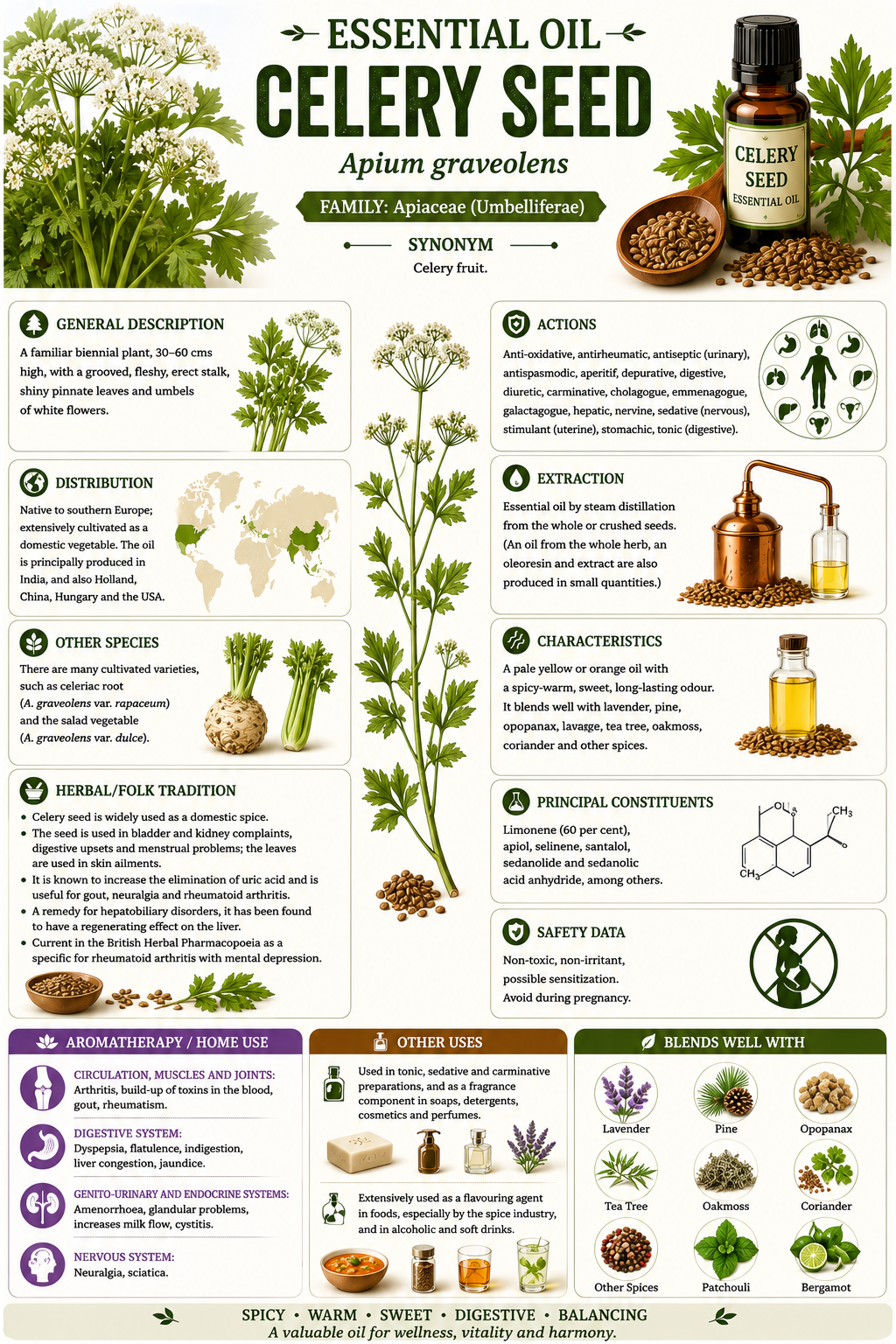
Essential Oil - Celery Seed
Essential Oil – Celery Seed
Botanical Information
Celery Seed essential oil is obtained from Apium graveolens, a member of the Apiaceae (Umbelliferae) family. Also known simply as Celery Fruit, this familiar biennial herb typically grows between 30 and 60 cm tall. It has grooved, fleshy stems, glossy divided leaves, and clusters of delicate white flowers that later produce the aromatic seeds used for essential oil extraction.
and soft drink industries.
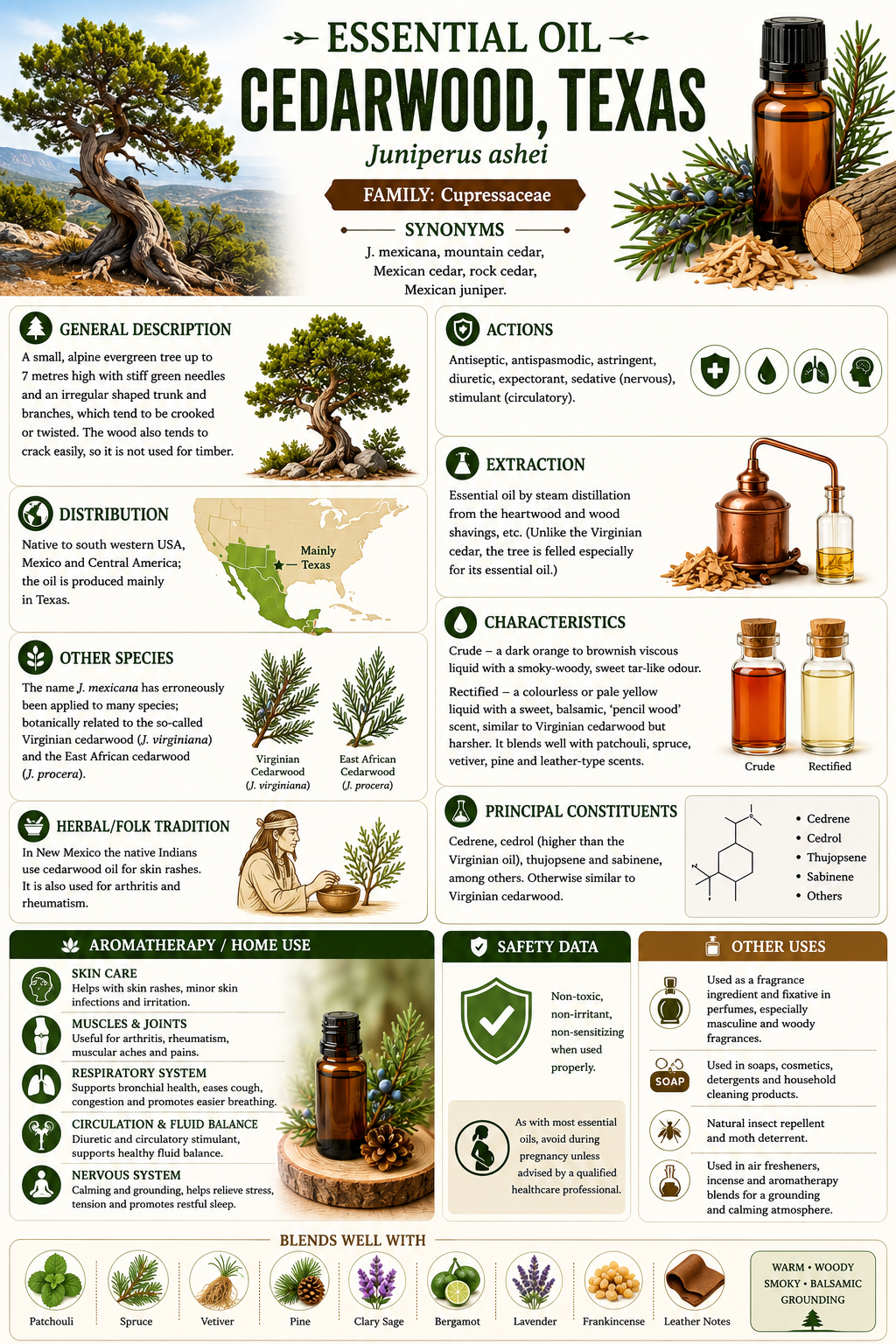
Essential Oil - Texas Cedarwood
Essential Oil – Cedarwood (Texas)
Botanical Information
Texas Cedarwood (Juniperus ashei) belongs to the Cupressaceae family and is also known as Mountain Cedar, Mexican Cedar, Rock Cedar, Mexican Juniper, and Juniperus mexicana. It is a small evergreen tree that typically grows up to 7 metres tall. The tree has stiff green needle-like foliage and a rugged trunk with twisted, irregular branches. Because the wood cracks easily, it has limited value as timber but is highly prized for its aromatic essential oil.
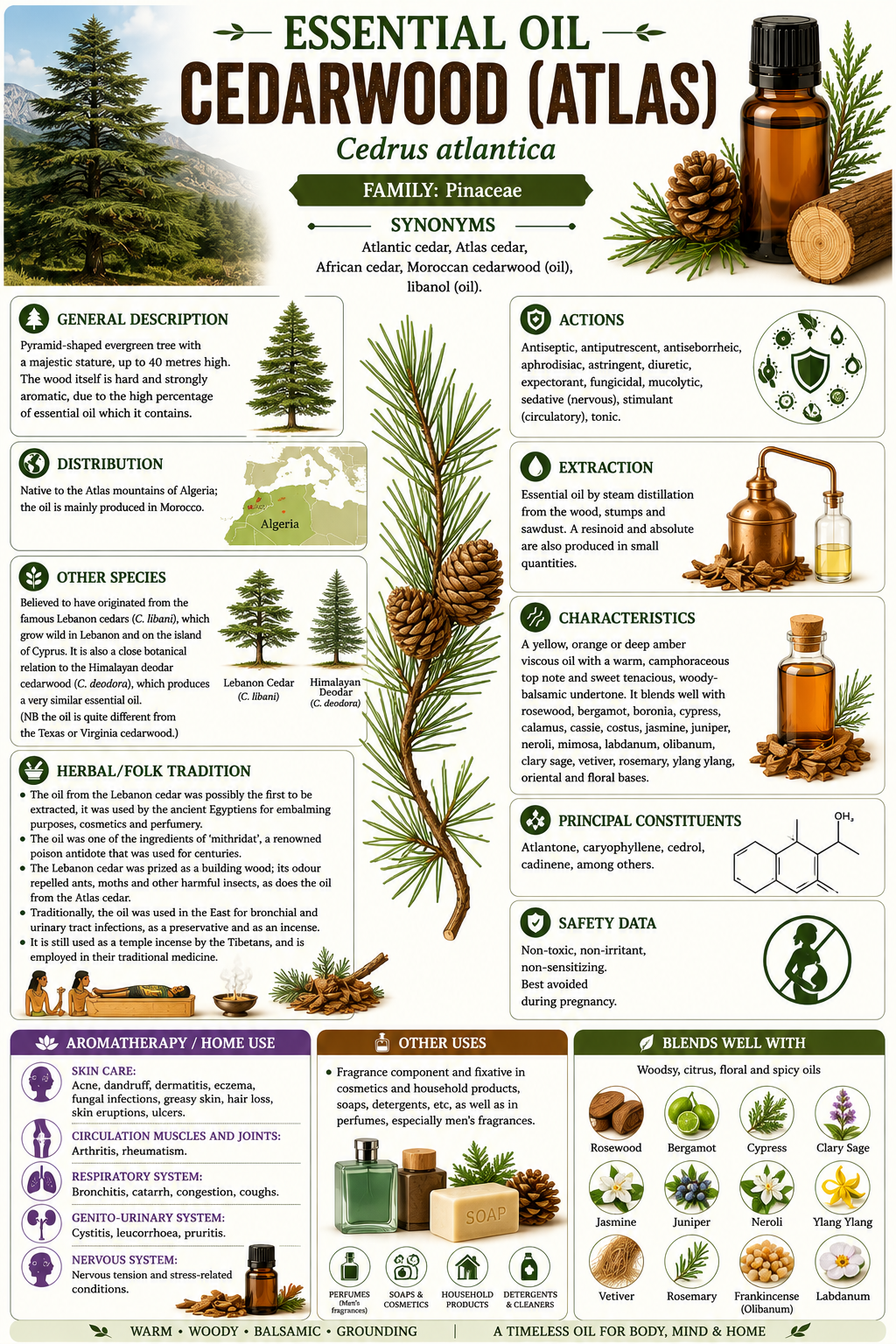
Essential Oil - Atlas Cedarwood
Essential Oil – Cedarwood (Atlas)
Botanical Information
Atlas Cedarwood (Cedrus atlantica) belongs to the Pinaceae family and is also known as Atlantic Cedar, African Cedar, Moroccan Cedarwood, and Libanol Oil. It is a majestic evergreen conifer with a distinctive pyramidal shape that can reach heights of up to 40 metres. Its durable wood is highly aromatic due to its naturally high essential oil content.
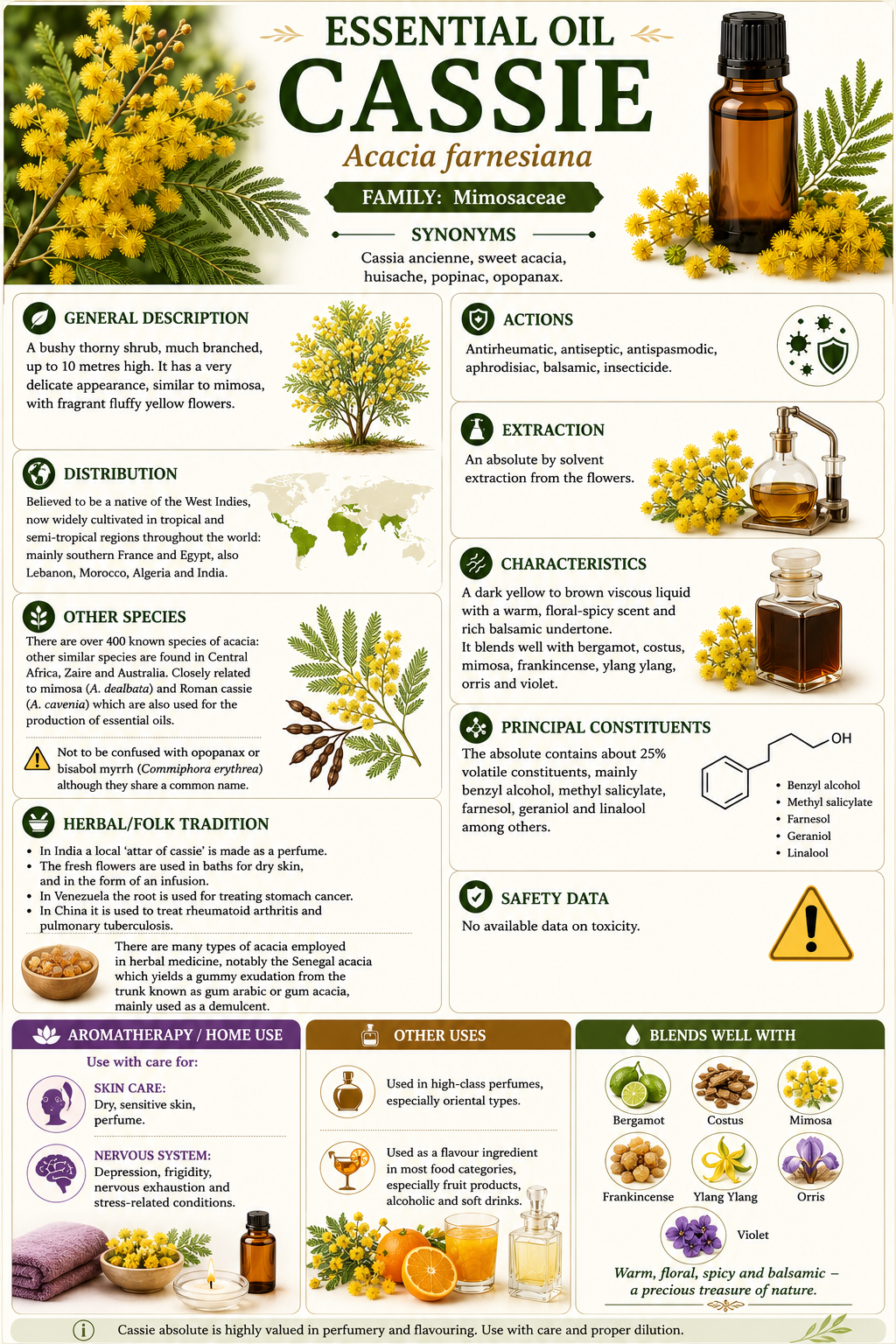
Essential Oil - Cassie
Essential Oil – Cassie
Botanical Information
Cassie (Acacia farnesiana) belongs to the Mimosaceae family and is also known as Sweet Acacia, Huisache, Popinac, Cassia Ancienne, and Opopanax. It is a bushy, thorny shrub or small tree that can grow up to 10 metres tall. The plant has finely divided foliage resembling mimosa and produces masses of fragrant, fluffy golden-yellow flowers that are highly prized in perfumery.
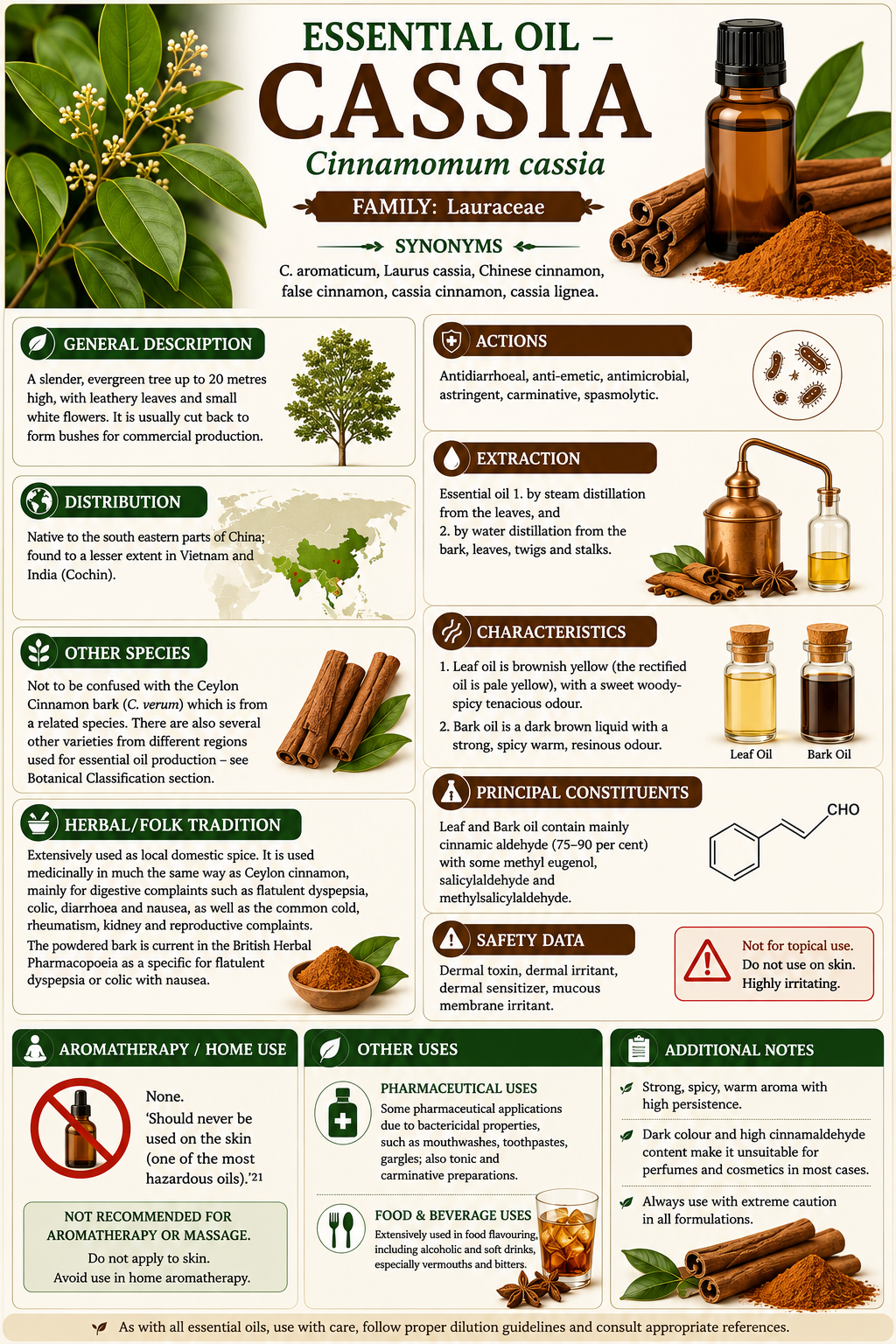
Essential Oil - Cassia
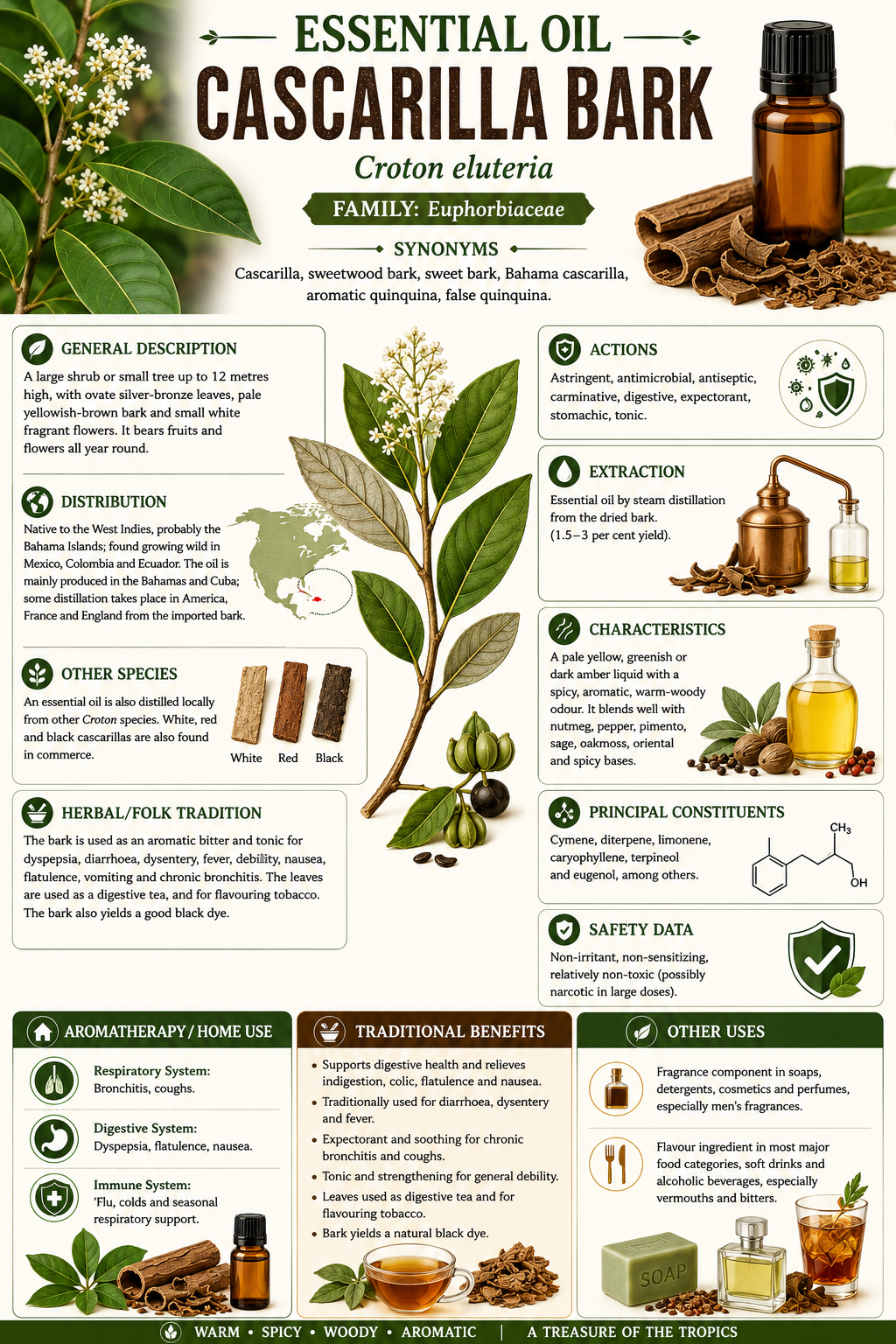
Essential Oil - Cascarilla Bark
Essential Oil – Cascarilla Bark
Botanical Information
Cascarilla Bark (Croton eluteria) belongs to the Euphorbiaceae family. It is also known as Cascarilla, Sweetwood Bark, Sweet Bark, Bahama Cascarilla, Aromatic Quinquina, and False Quinquina. The plant is a large shrub or small evergreen tree that grows up to 12 metres tall. It has oval silver-bronze leaves, pale yellowish-brown aromatic bark, and clusters of small, fragrant white flowers. Under favorable tropical conditions, it produces flowers and fruits throughout the year.
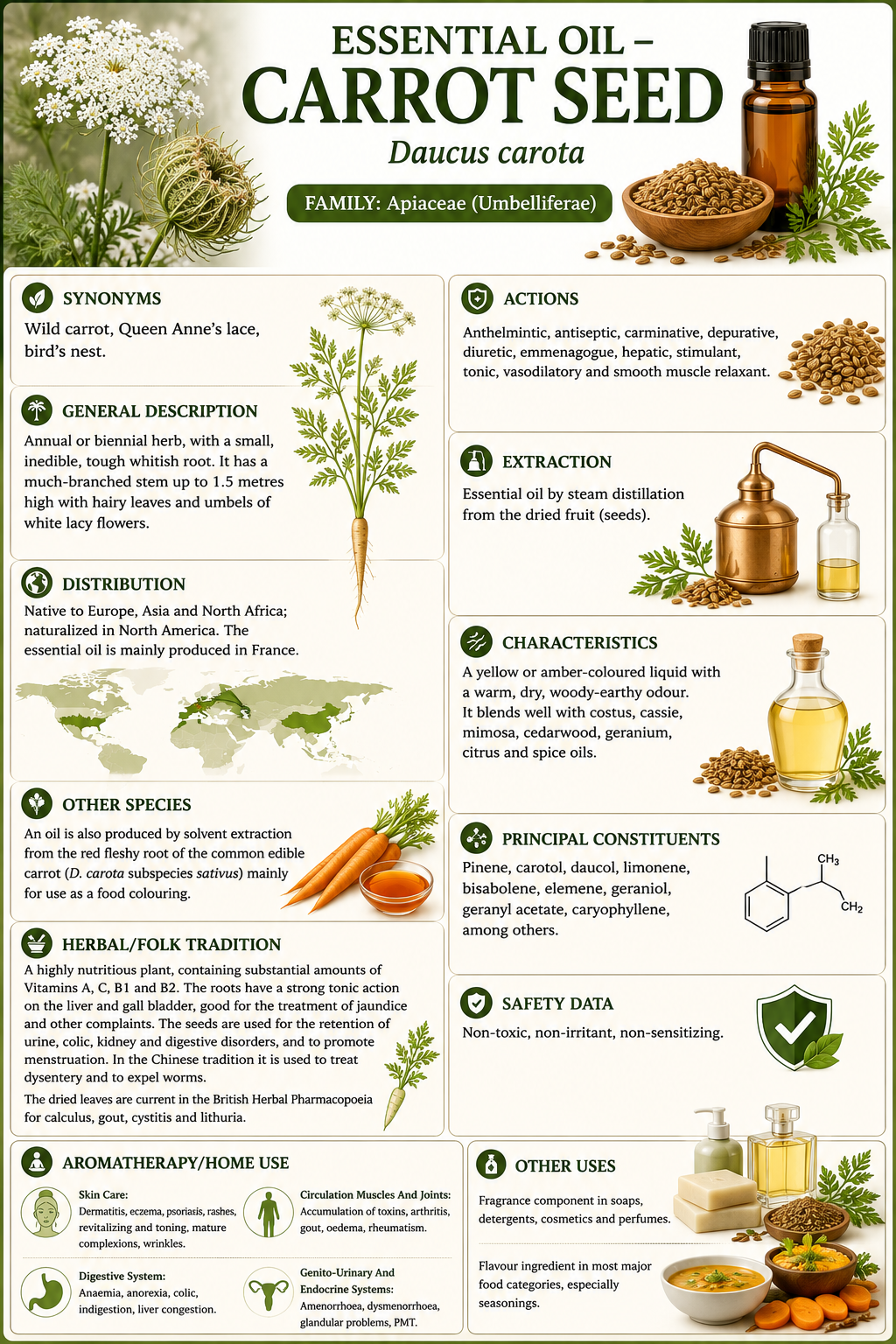
Essential Oil - Carrot Seed
Essential Oil – Carrot Seed
Botanical Information
Carrot Seed (Daucus carota) belongs to the Apiaceae (Umbelliferae) family. It is commonly known as Wild Carrot, Queen Anne’s Lace, or Bird’s Nest. This annual or biennial herb grows up to 1.5 metres tall and features finely divided, hairy leaves with delicate white umbrella-shaped flower clusters. Unlike the cultivated carrot, the wild variety has a small, tough, whitish root that is not edible. The essential oil is obtained from its aromatic seeds.
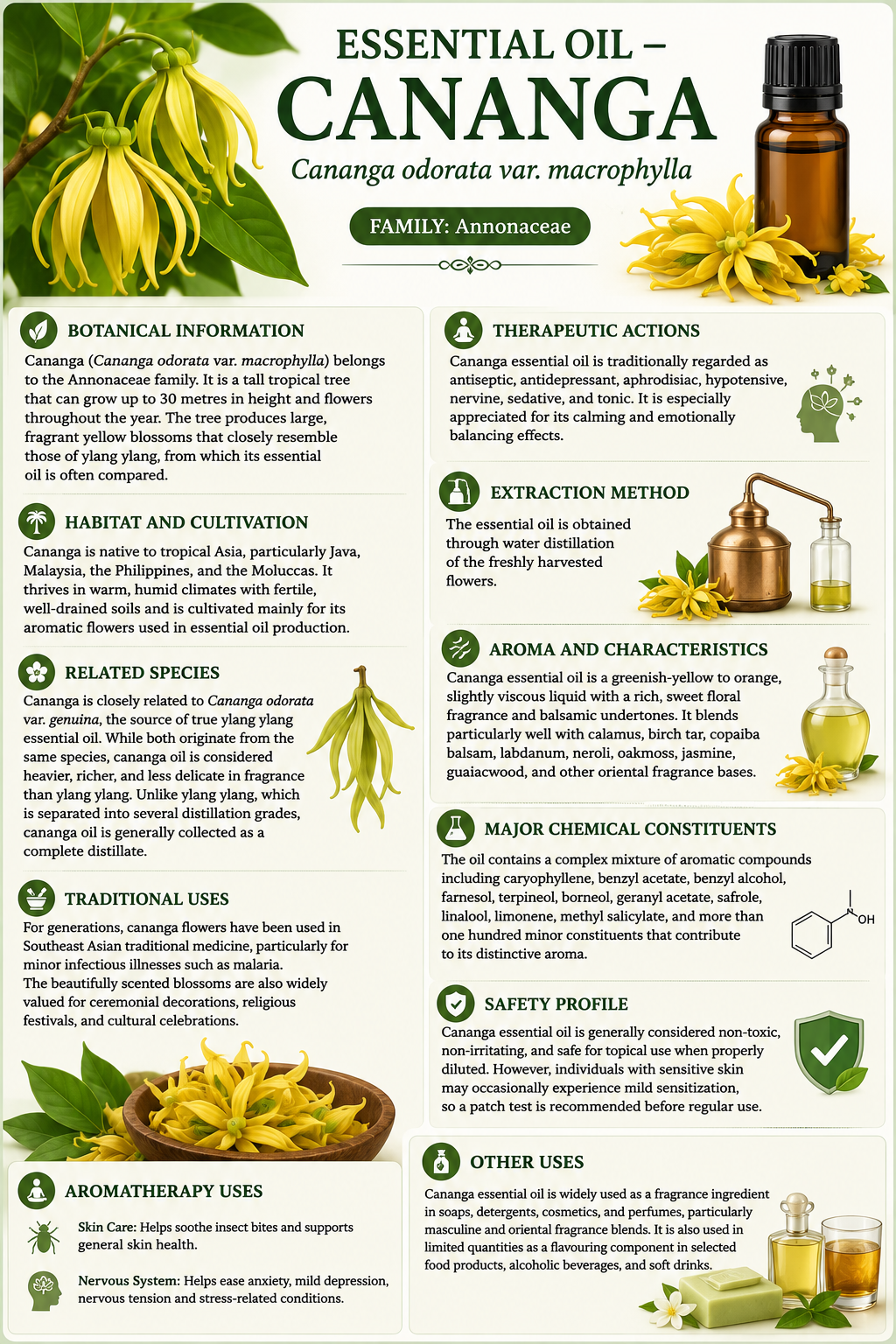
Essential Oil - Cananga
Essential Oil – Cananga
Botanical Information
Cananga (Cananga odorata var. macrophylla) belongs to the Annonaceae family. It is a tall tropical tree that can grow up to 30 metres in height and flowers throughout the year. The tree produces large, fragrant yellow blossoms that closely resemble those of ylang ylang, from which its essential oil is often compared.