

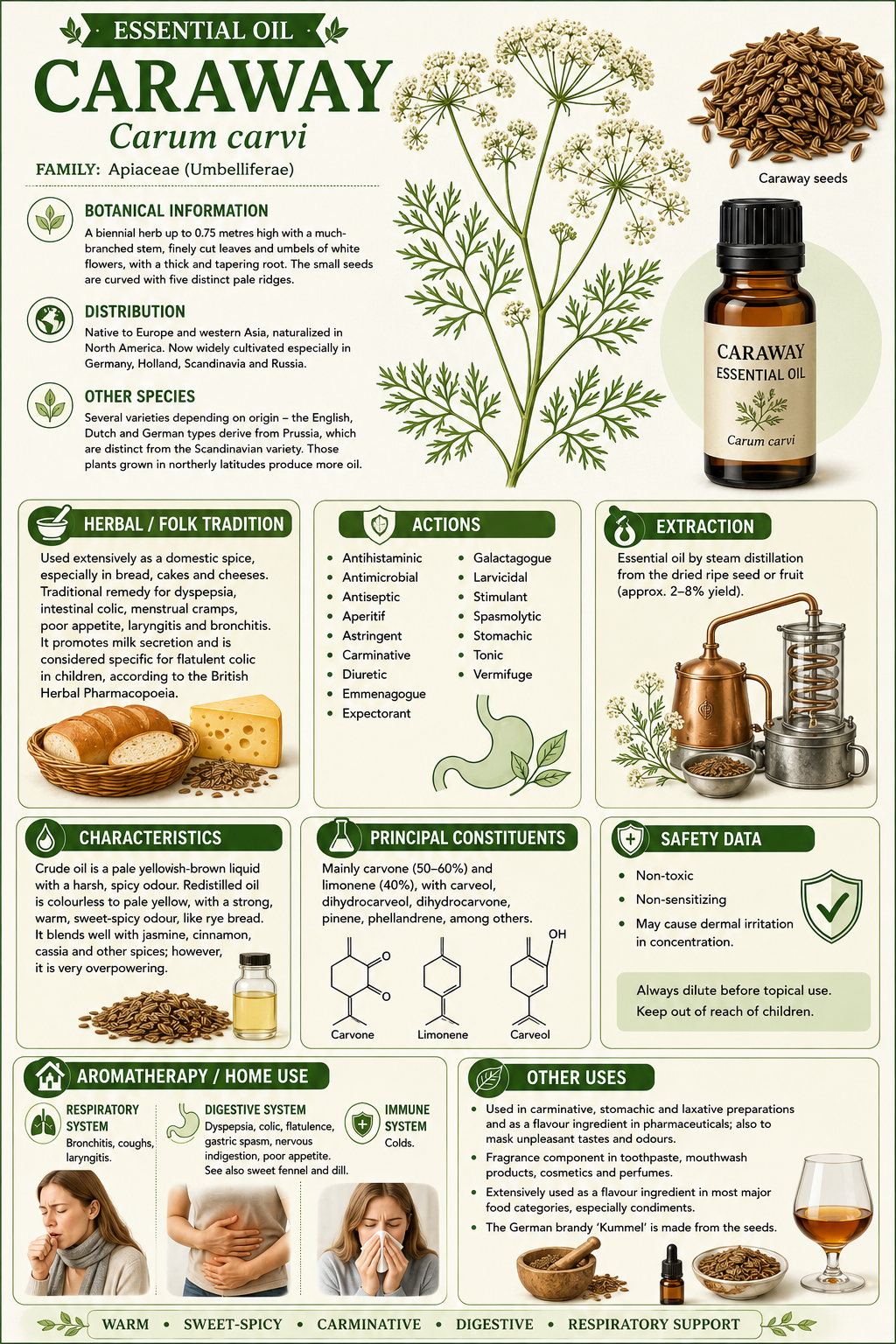
Essential Oil- Caraway
Essential Oil – Caraway
Botanical Information
Caraway (Carum carvi) belongs to the Apiaceae (Umbelliferae) family. It is also known as Apium carvi, carum, or caraway fruits. Caraway is a biennial herb that grows up to 0.75 metres tall, with a much-branched stem, finely divided leaves, umbels of small white flowers, a thick tapering root, and small curved seeds marked by five distinct pale ridges.
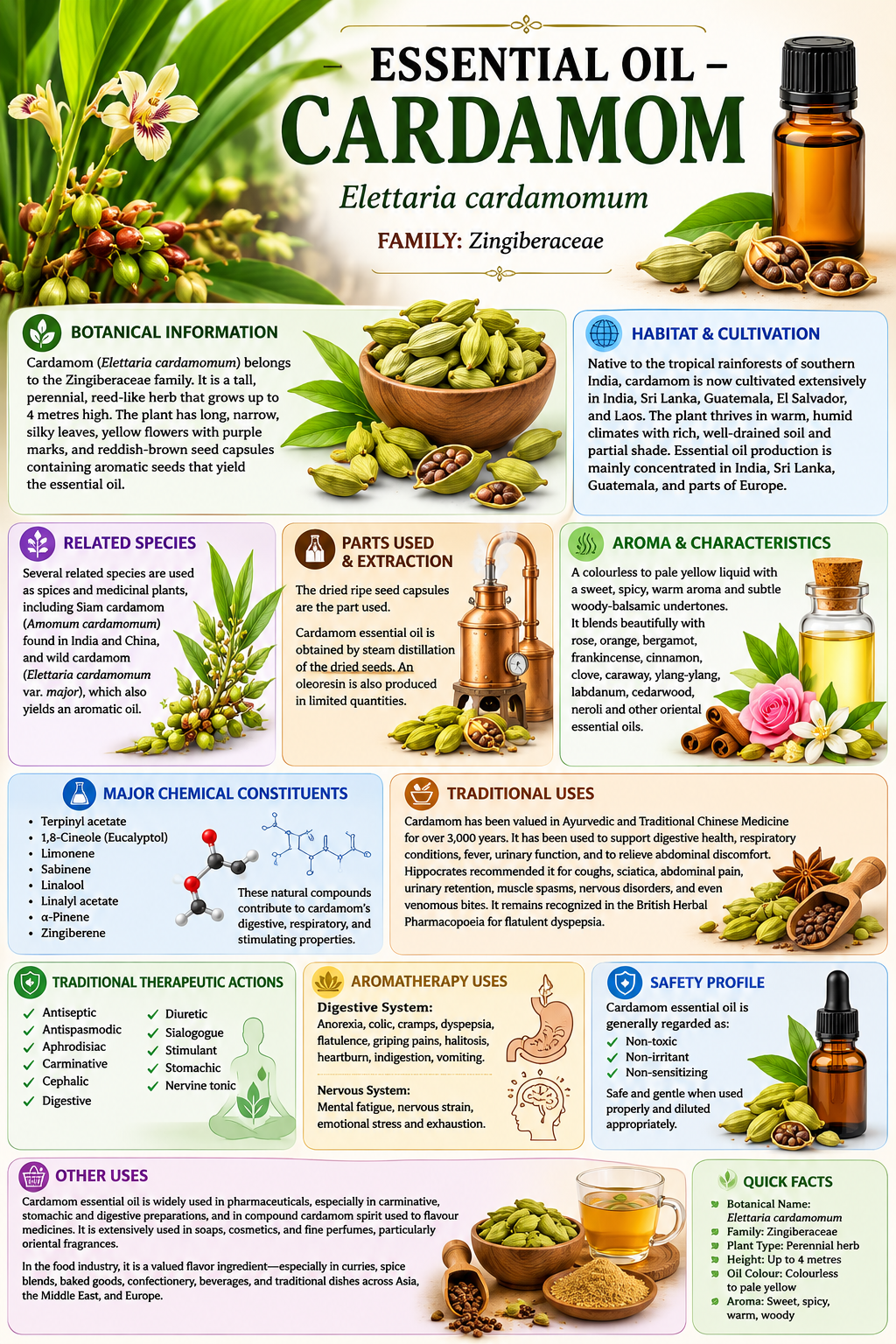
Essential Oil - Cardamom
Essential Oil – Cardamom
Botanical Information
Cardamom (Elettaria cardamomum) belongs to the Zingiberaceae (Ginger) family and is commonly known as Mysore cardamom, cardamom, cardamomi, or cardamum. It is a tall, perennial herb that resembles a reed and can grow up to 4 metres in height. The plant has long, narrow, silky green leaves, delicate yellow flowers with purple markings, and reddish-brown seed capsules. These aromatic seeds are the source of the prized essential oil.
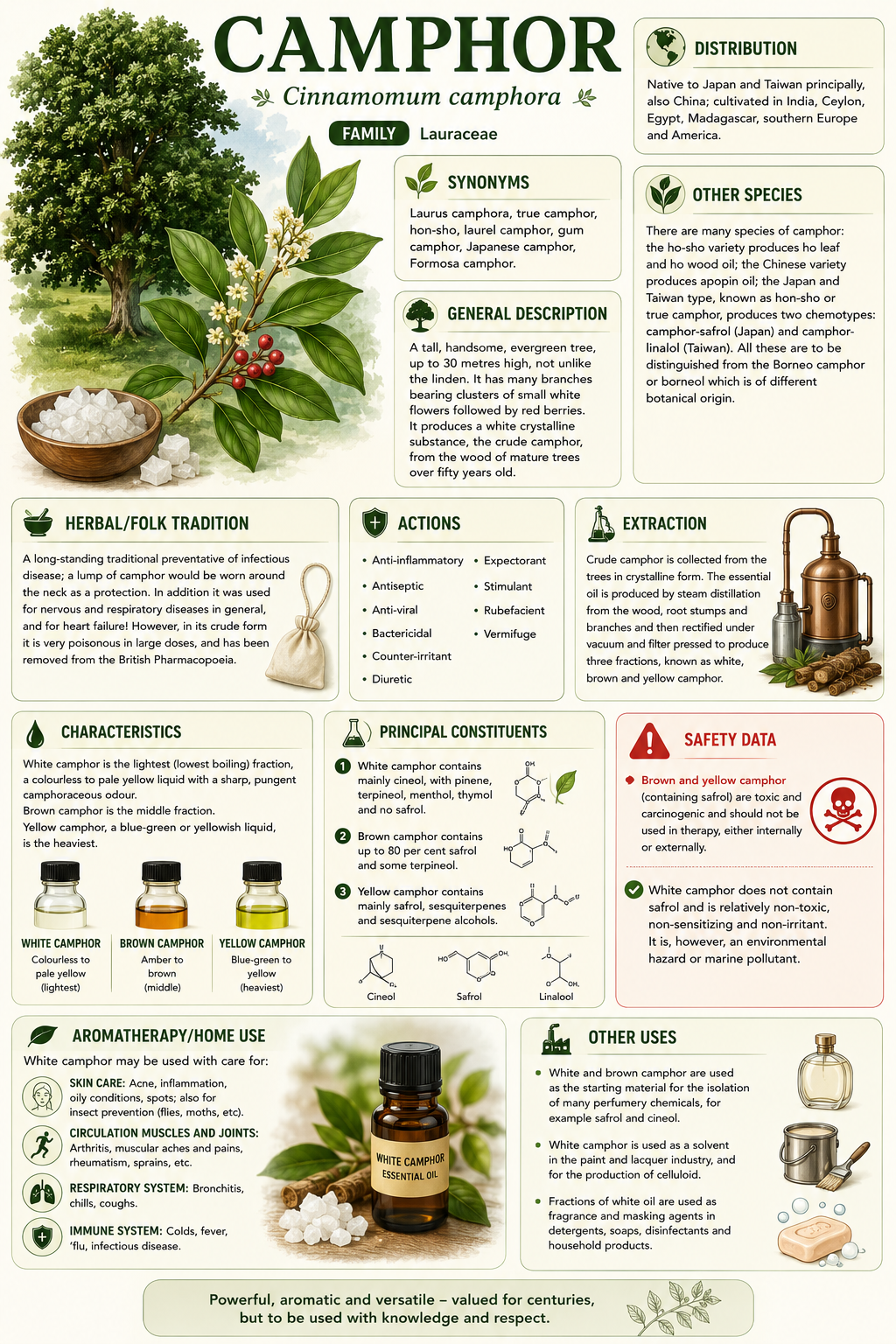
Essential Oil - Camphor
Essential Oil – Camphor
Botanical Information
Camphor (Cinnamomum camphora) belongs to the Lauraceae family. It is also known as Laurus camphora, true camphor, hon-sho, laurel camphor, gum camphor, Japanese camphor, and Formosa camphor. It is a tall, evergreen tree that can grow up to 30 metres in height. The tree has many branches bearing clusters of small white flowers followed by red berries. Mature trees over 50 years old produce a white crystalline substance known as crude camphor, which is obtained from the wood.
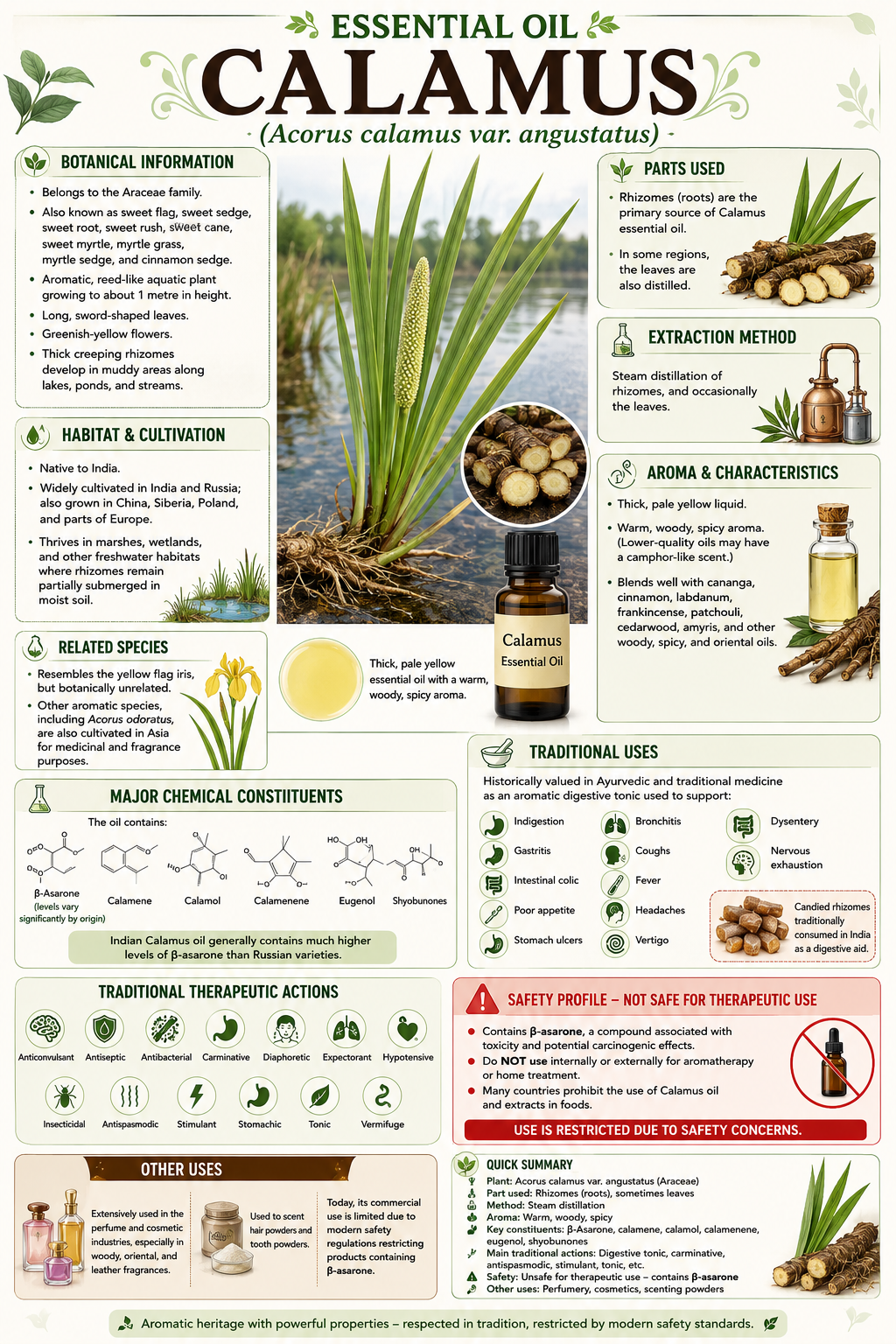
Essential Oil - Calamus
Essential Oil – Calamus (Acorus calamus var. angustatus)
Botanical Information
Calamus (Acorus calamus var. angustatus) belongs to the Araceae family. It is commonly known as sweet flag, sweet sedge, sweet root, sweet rush, sweet cane, sweet myrtle, myrtle grass, myrtle sedge, and cinnamon sedge. It is an aromatic, reed-like aquatic plant that grows up to 1 metre in height. The plant has long sword-shaped leaves, greenish-yellow flowers, and thick creeping rhizomes that grow in muddy areas along lakes, ponds, and streams.
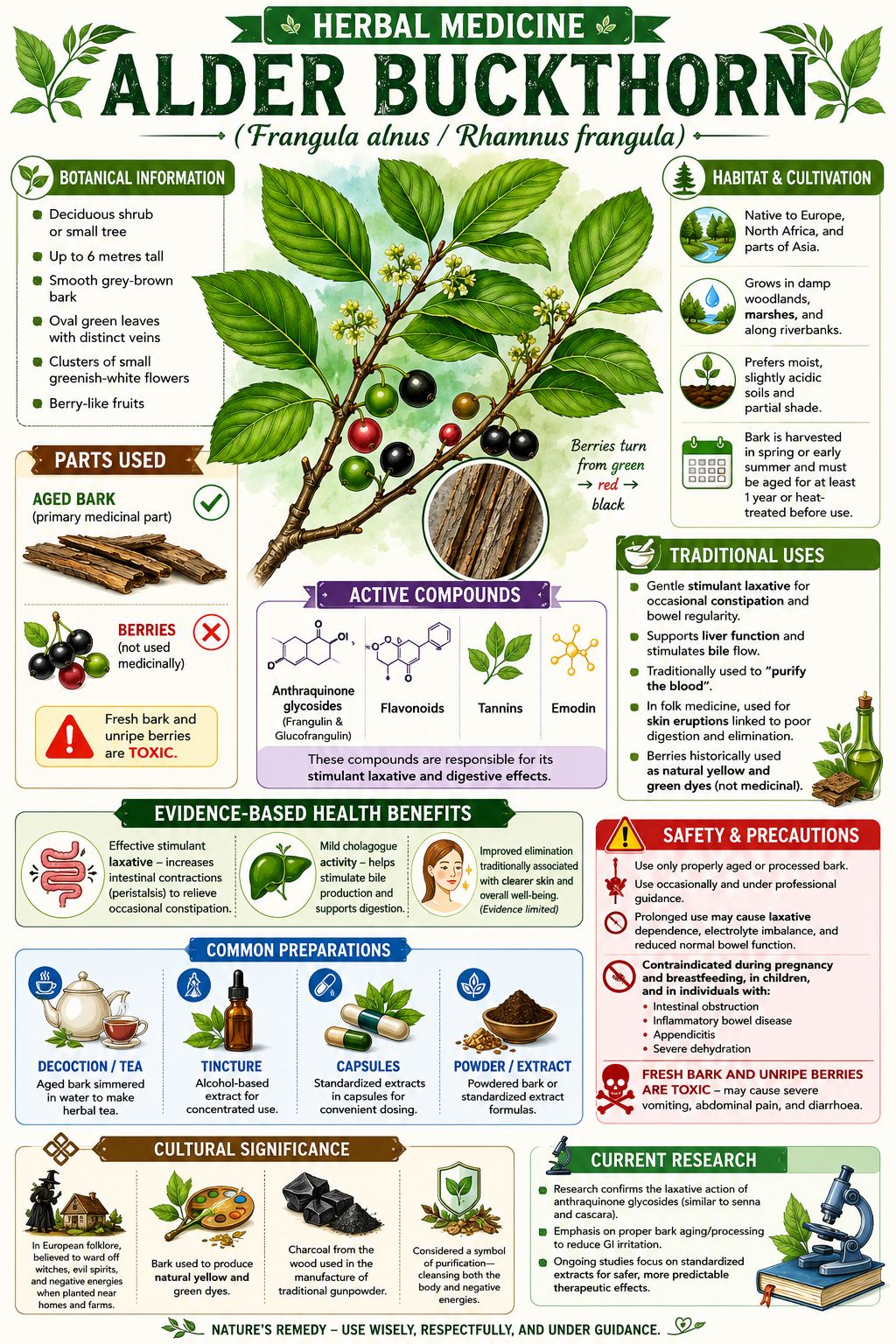
Herbal Medicine - Alder Buckthorn
Herbal Medicine – Alder Buckthorn
Botanical Information
Alder Buckthorn (Rhamnus frangula), now more commonly classified as Frangula alnus, belongs to the Rhamnaceae family. It is a deciduous shrub or small tree that grows up to 6 metres tall. The plant features smooth grey-brown bark, oval green leaves with distinct veins, clusters of small greenish-white flowers, and berry-like fruits that change from green to red before ripening to glossy black.
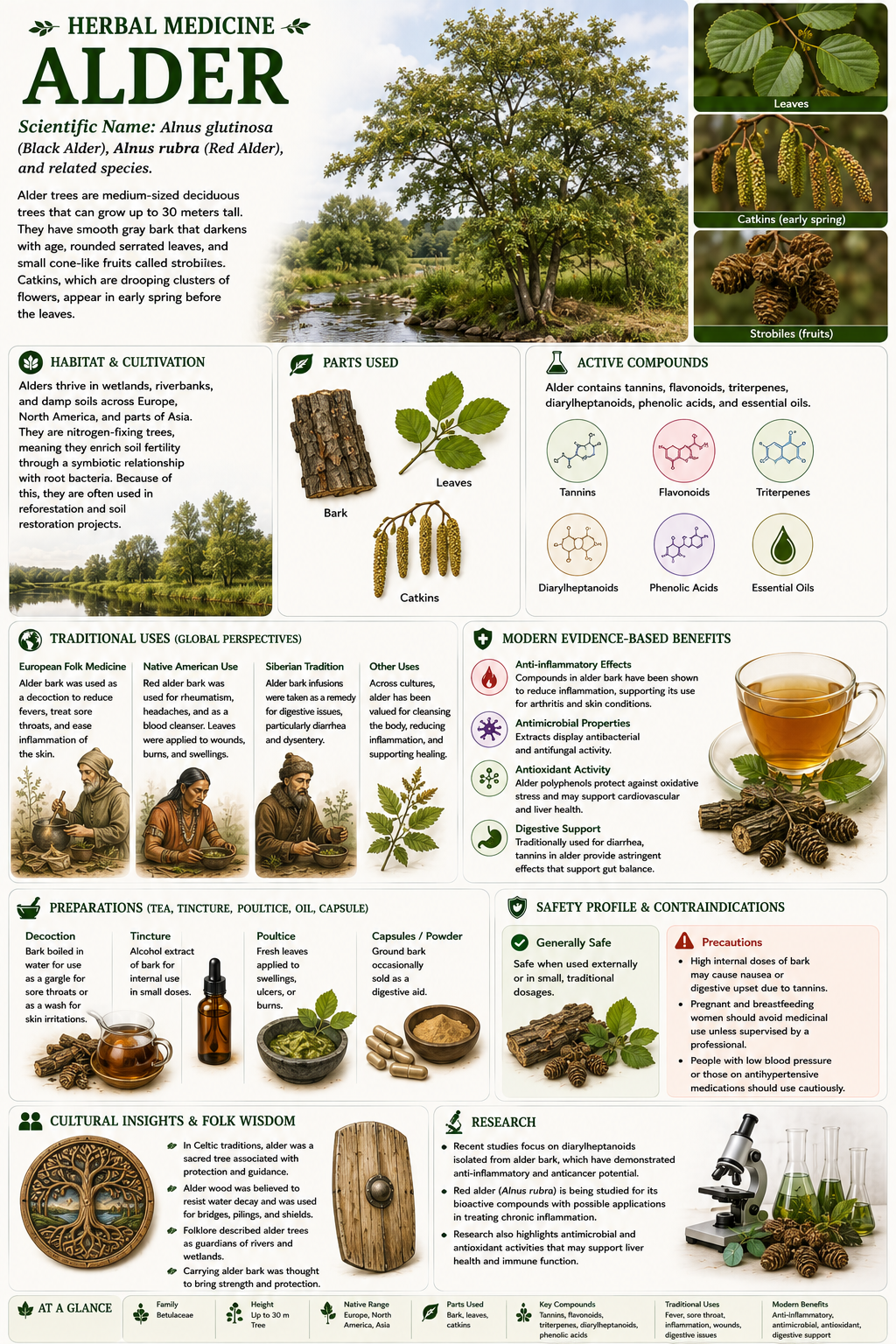
Herbal Medicine - Alder
Herbal Medicine – Alder
Botanical Information
Alder (Alnus glutinosa), commonly known as Black Alder, along with related species such as Alnus rubra (Red Alder), belongs to the Betulaceae family. It is a medium-sized deciduous tree that can grow up to 30 metres tall. Alder is recognized by its smooth grey bark, rounded serrated leaves, drooping catkins that appear in early spring, and small woody cone-like fruits known as strobiles.
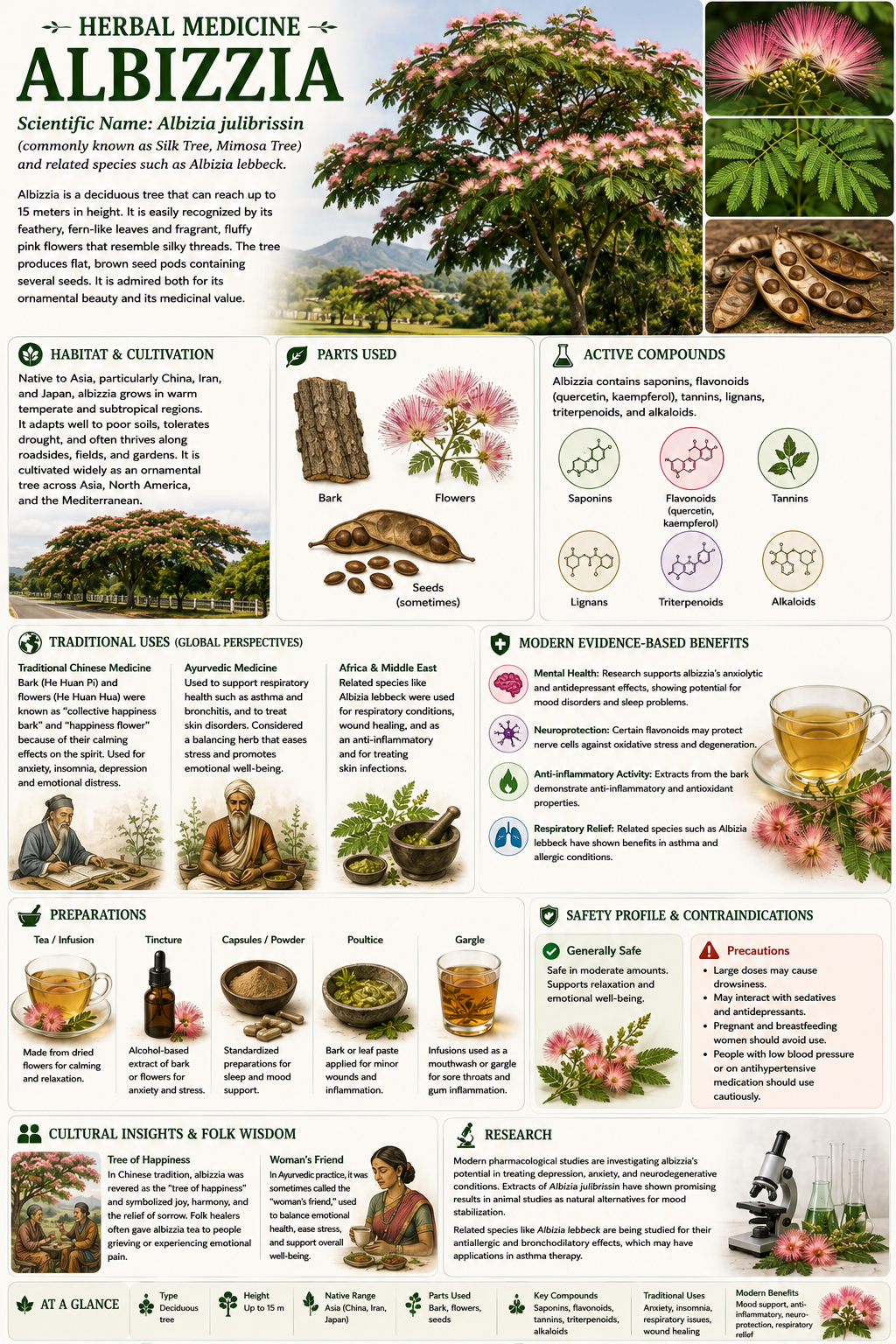
Herbal Medicine - Albizzia
Herbal Medicine – Albizzia
Botanical Information
Albizzia (Albizia julibrissin), commonly known as the Silk Tree or Mimosa Tree, belongs to the Fabaceae family. Related medicinal species include Albizia lebbeck. It is a deciduous tree that can grow up to 15 metres tall, featuring graceful fern-like leaves, fragrant silky pink flowers, and flat brown seed pods containing several seeds. The tree is widely appreciated for both its ornamental beauty and traditional medicinal value.
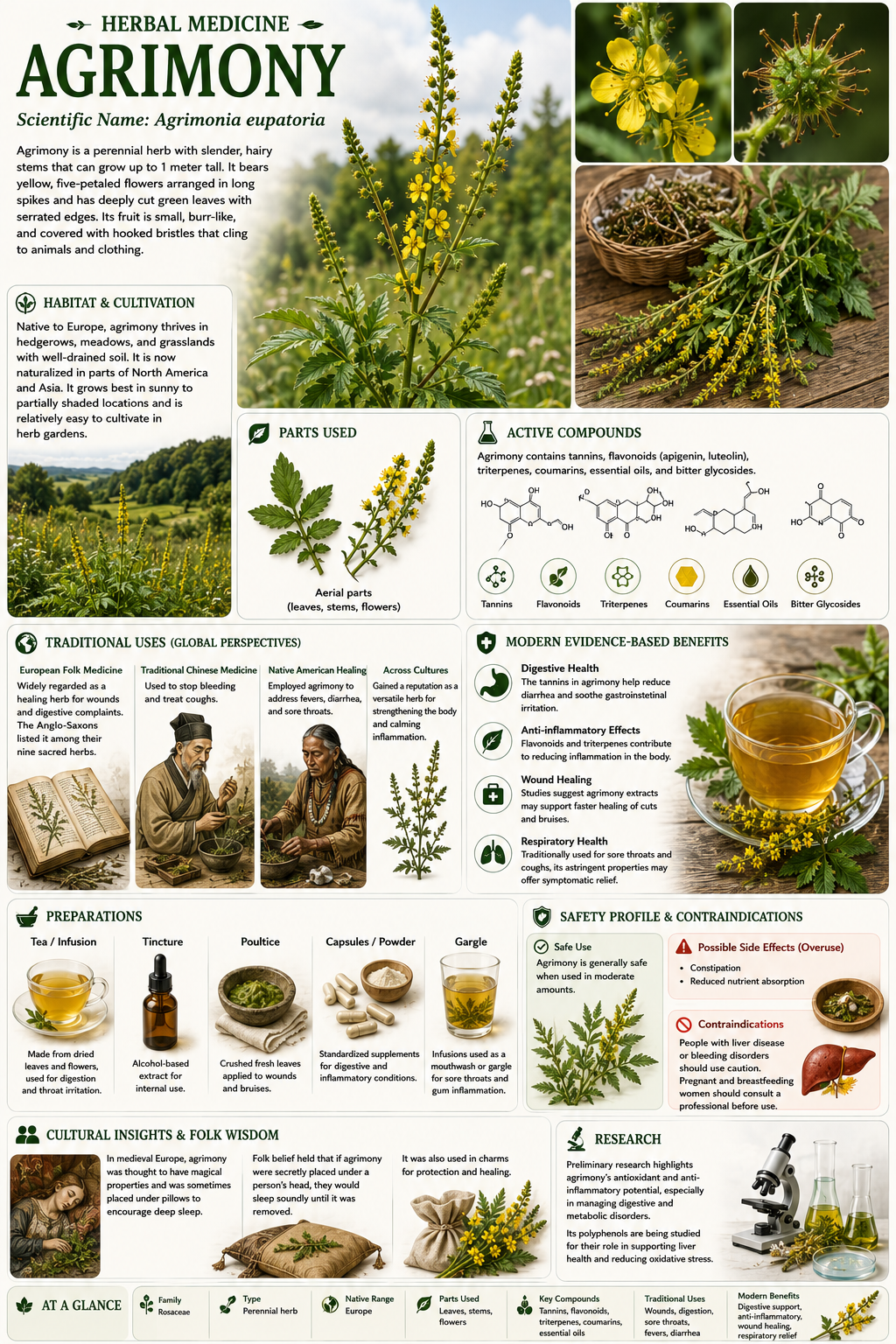
Herbal Medicine - Agrimony
Herbal Medicine – Agrimony
Botanical Information
Agrimony (Agrimonia eupatoria) is a perennial herb belonging to the Rosaceae family. It grows up to 1 metre tall with slender, hairy stems, deeply serrated green leaves, and long spikes of bright yellow, five-petaled flowers. The small burr-like fruits are covered with hooked bristles that easily cling to clothing and animal fur, aiding seed dispersal.
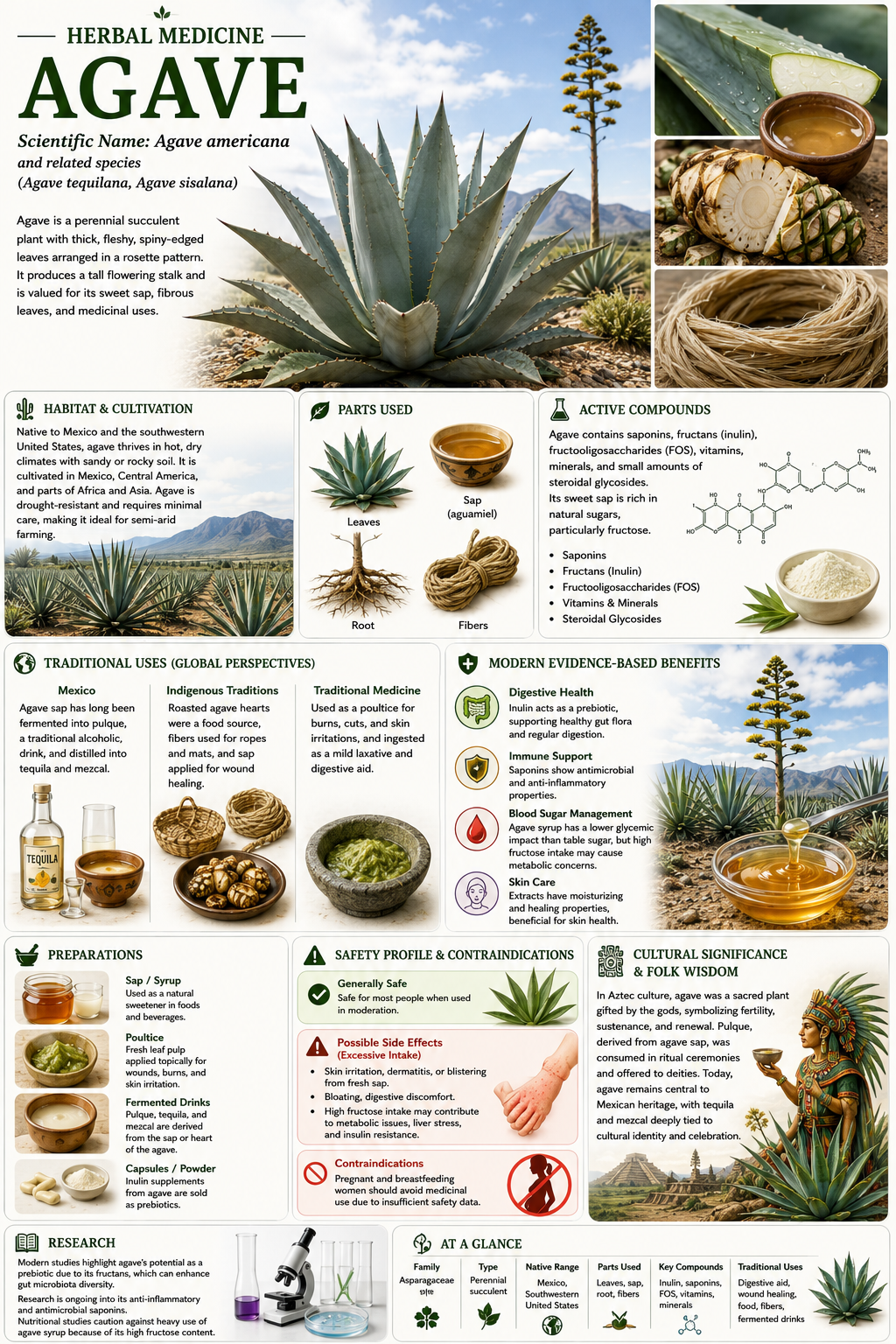
Herbal Medicine - Agave
Herbal Medicine – Agave
Botanical Information
Agave (Agave americana) and related species, including Agave tequilana and Agave sisalana, belong to the Asparagaceae family. These perennial succulents are characterized by their thick, fleshy leaves arranged in a striking rosette pattern, with sharp spines along the edges and at the tips. Mature plants produce an impressive flowering stalk that can grow several metres high before completing their life cycle. Renowned for their resilience, agave plants thrive in harsh, arid environments and have long been valued for their sweet sap, strong fibres, and medicinal properties.
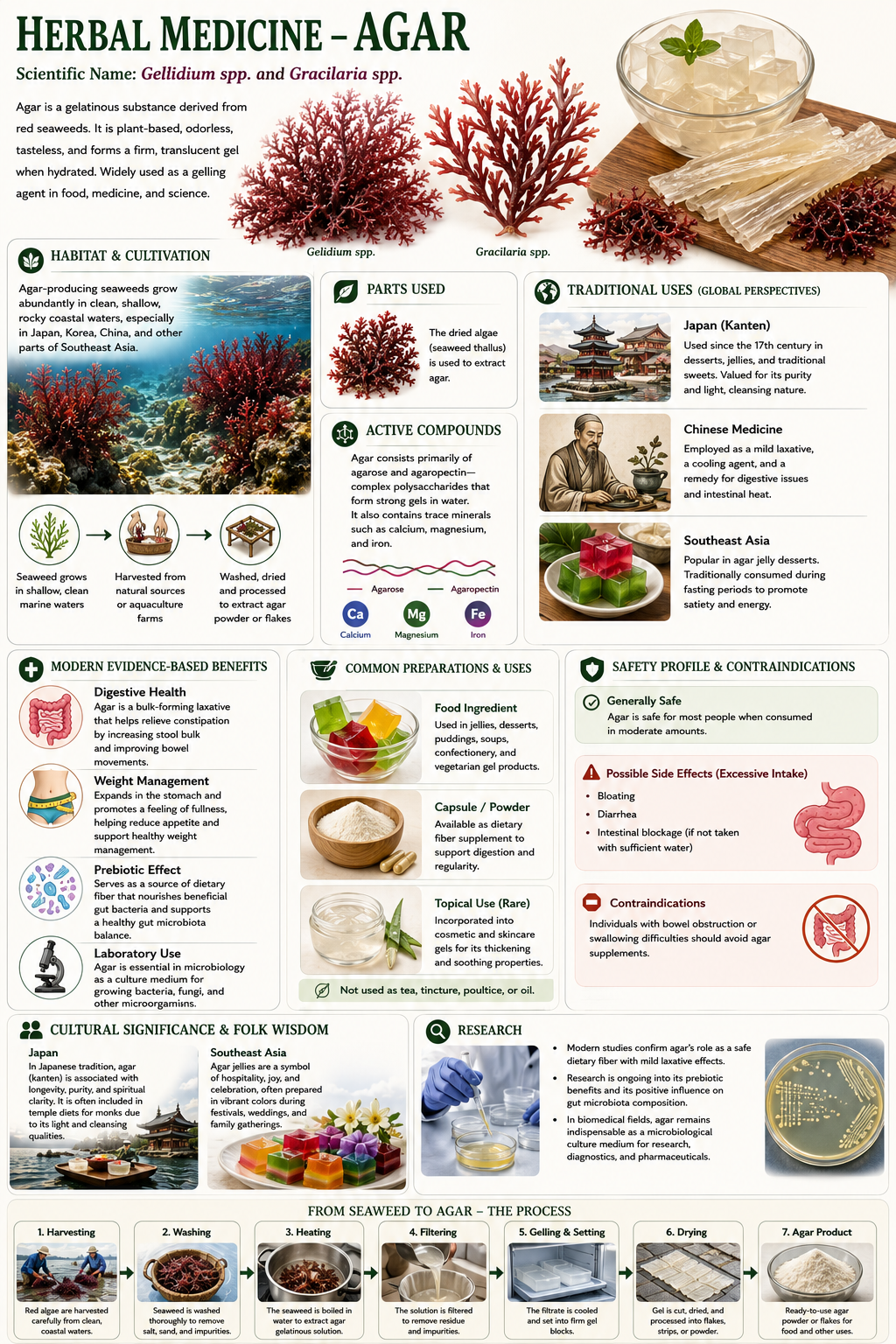
Herbal Medicine - Agar
Herbal Medicine – Agar
Botanical Information
Agar is a natural gelatinous substance obtained from several species of red algae, primarily Gelidium spp. and Gracilaria spp. Unlike animal-derived gelatin, agar is completely plant-based, odourless, tasteless, and forms a firm, translucent gel when mixed with water. It has long been valued as both a food ingredient and a functional material due to its excellent gelling properties.
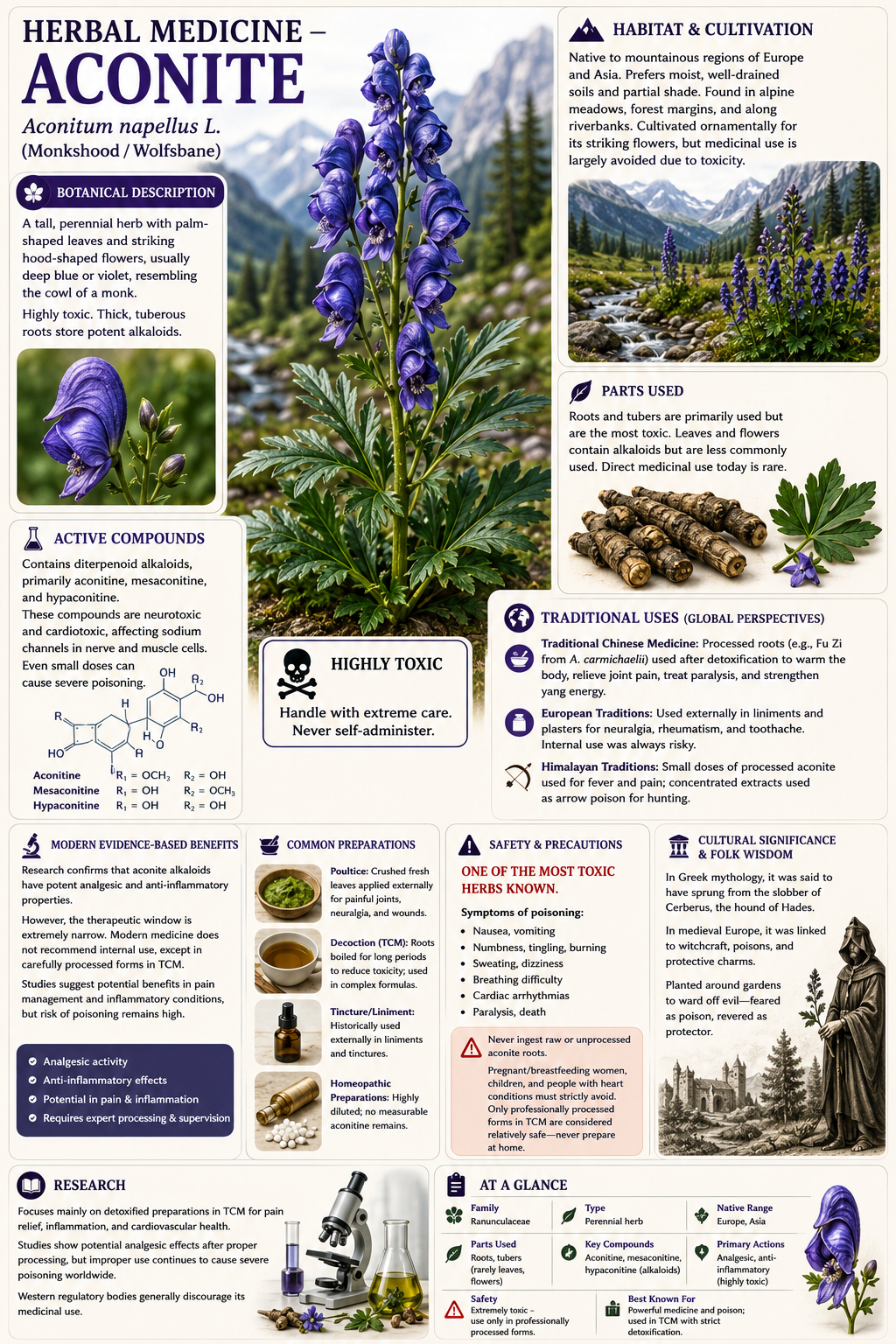
Herbal Medicine - Aconite
Herbal Medicine – Aconite
Botanical Information
Aconite (Aconitum napellus L.), commonly known as Monkshood or Wolfsbane, belongs to the Ranunculaceae family. It is a tall perennial herb distinguished by its deeply divided, palm-shaped leaves and striking hood-shaped flowers that are usually deep blue or violet, resembling a monk’s cowl. Although admired for its ornamental beauty, Aconite is considered one of the most poisonous plants in the world. Its thick, tuberous roots contain highly potent alkaloids that have historically been used both medicinally and as deadly poisons.
Herbal Medicine - Acanthus
Herbal Medicine – Acanthus
Botanical Information
Acanthus (Acanthus mollis L.), commonly known as Bear’s Breeches, belongs to the Acanthaceae family. Other medicinally recognized species include Acanthus spinosus L. It is a striking perennial plant distinguished by its large, glossy, deeply lobed dark green leaves and tall flower spikes bearing white to purple blossoms with hood-like bracts. Beyond its medicinal value, Acanthus has been admired for centuries as an ornamental plant and is famously represented in the elaborate Corinthian columns of ancient Greek architecture.
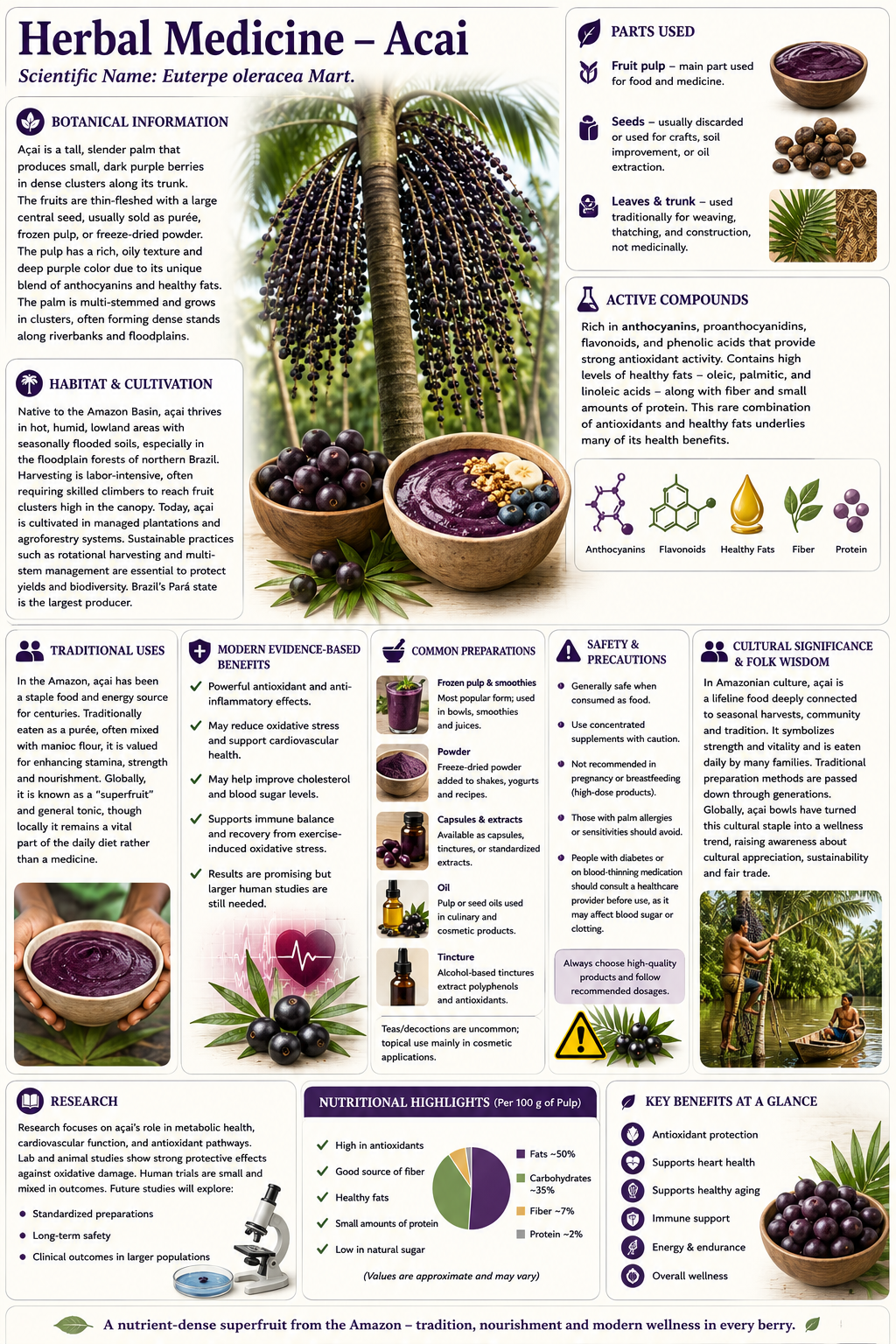
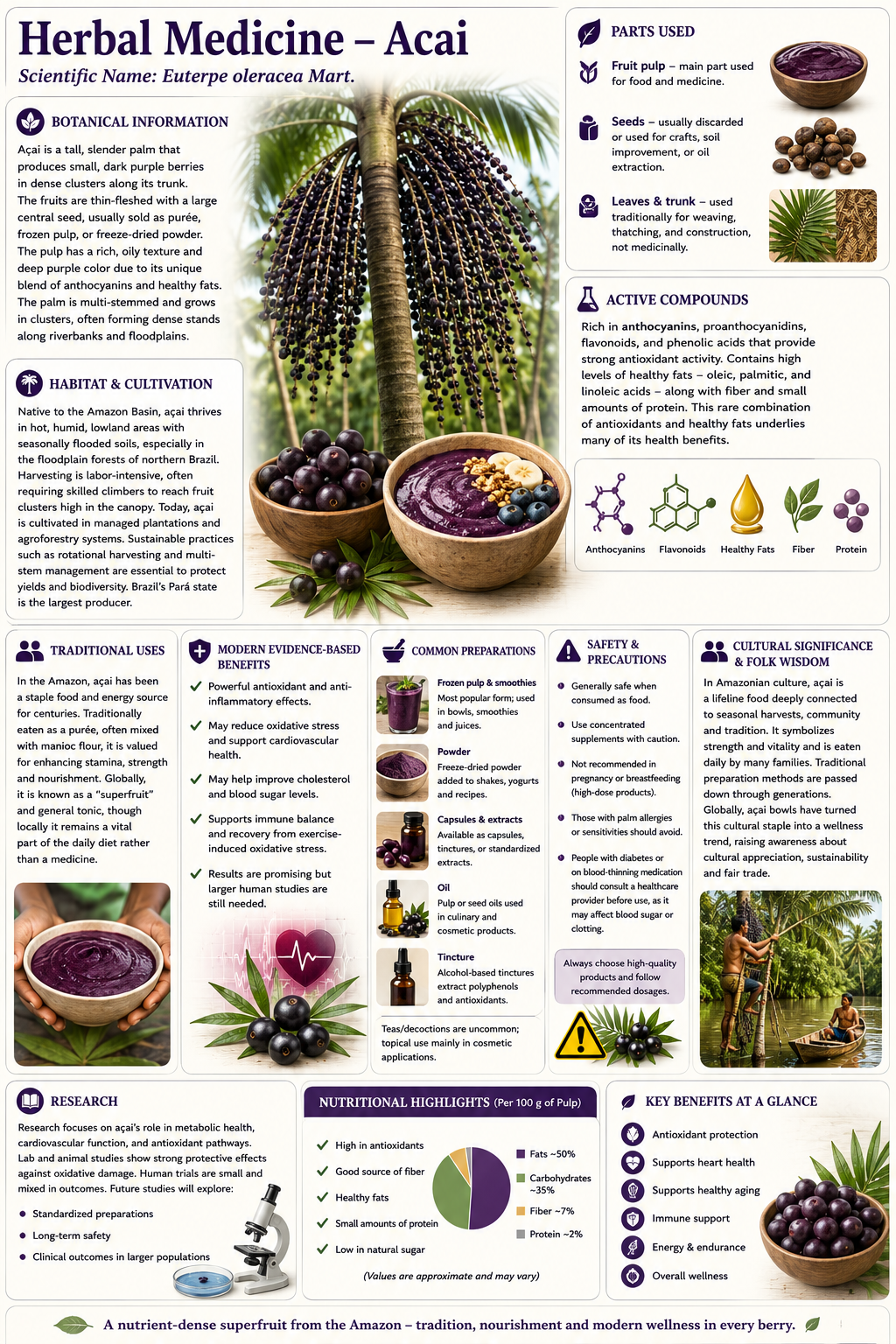
Herbal Medicine - Acai
Herbal Medicine – Acai
Botanical Information
Açai (Euterpe oleracea Mart.) is a tall, slender palm belonging to the Arecaceae family. It produces clusters of small, dark purple berries that grow directly from the trunk. Each berry contains a large central seed with only a thin layer of edible pulp, which is why açai is commonly processed into frozen pulp, purée, or freeze-dried powder rather than eaten fresh. The pulp has a rich, creamy texture and a deep purple colour, attributed to its abundance of anthocyanins and healthy fats. The palm is naturally multi-stemmed, forming dense clumps along riverbanks and floodplains.
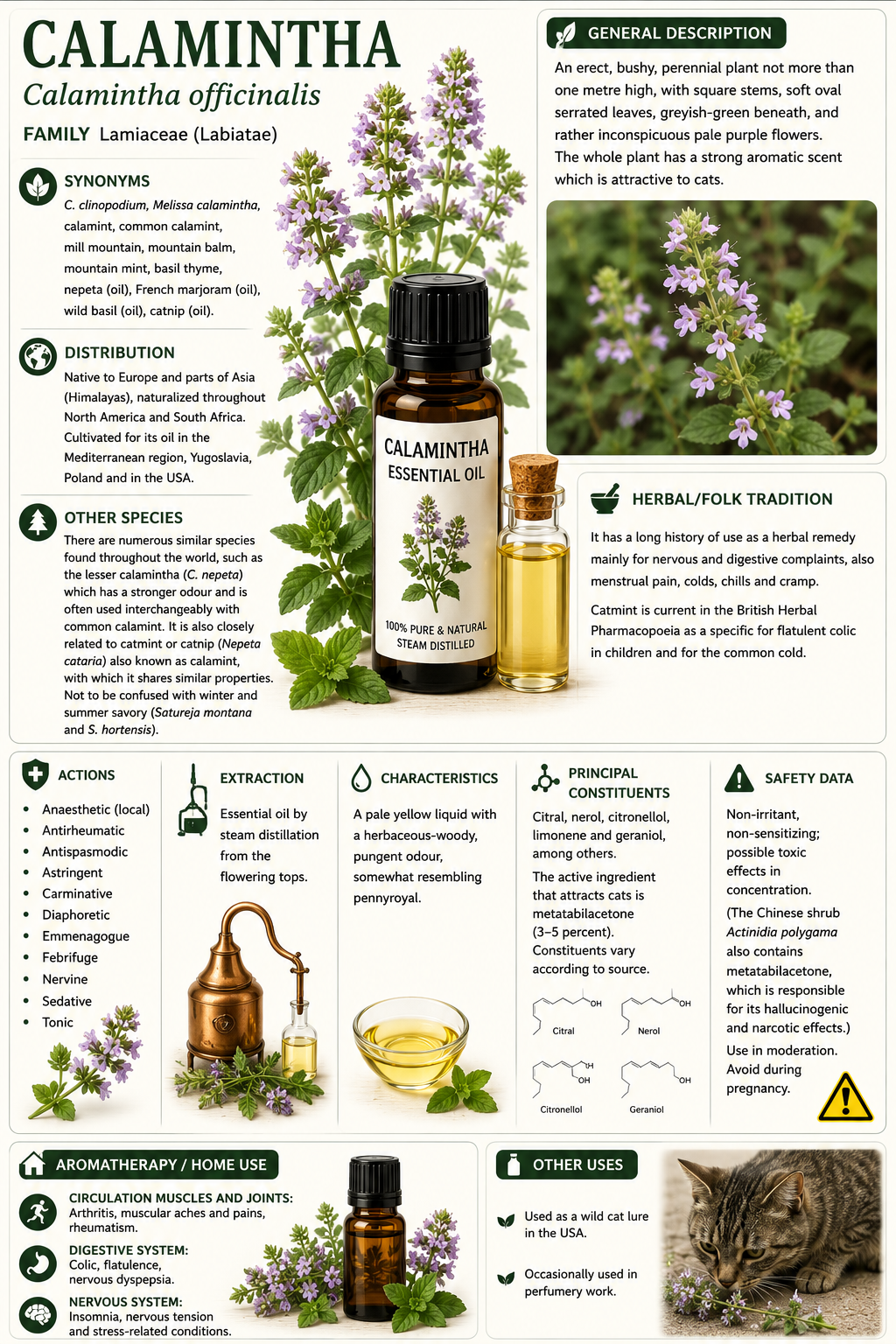
Essential Oil - Calamintha
Essential Oil – Calamintha
Botanical Information
Calamintha (Calamintha officinalis) belongs to the Lamiaceae (Labiatae) family and is an upright, bushy perennial herb that typically grows to about one metre in height. It has square stems, soft oval leaves with serrated edges that are greyish-green underneath, and small pale purple flowers. The entire plant emits a strong aromatic fragrance that is particularly attractive to cats. It is also known by several names, including Calamintha clinopodium, Melissa calamintha, calamint, common calamint, mill mountain, mountain balm, mountain mint, basil thyme, French marjoram (oil), wild basil (oil), and catnip (oil).
Essential Oil -Cajeput
Essential Oil – Cajeput
Botanical Information
Cajeput (Melaleuca cajeputi) belongs to the Myrtaceae family and is a tall evergreen tree that can grow up to 30 metres in height. It has thick, pointed leaves, white flowers, and a flexible trunk covered with whitish, papery bark that peels away easily. The name “cajeput” is derived from the Malay term “caju-puti,” meaning “white wood,” referring to the pale colour of its timber. It is also known by several other names, including Melaleuca minor, cajuput, white tea tree, white wood, swamp tea tree, punk tree, and paperbark tree.
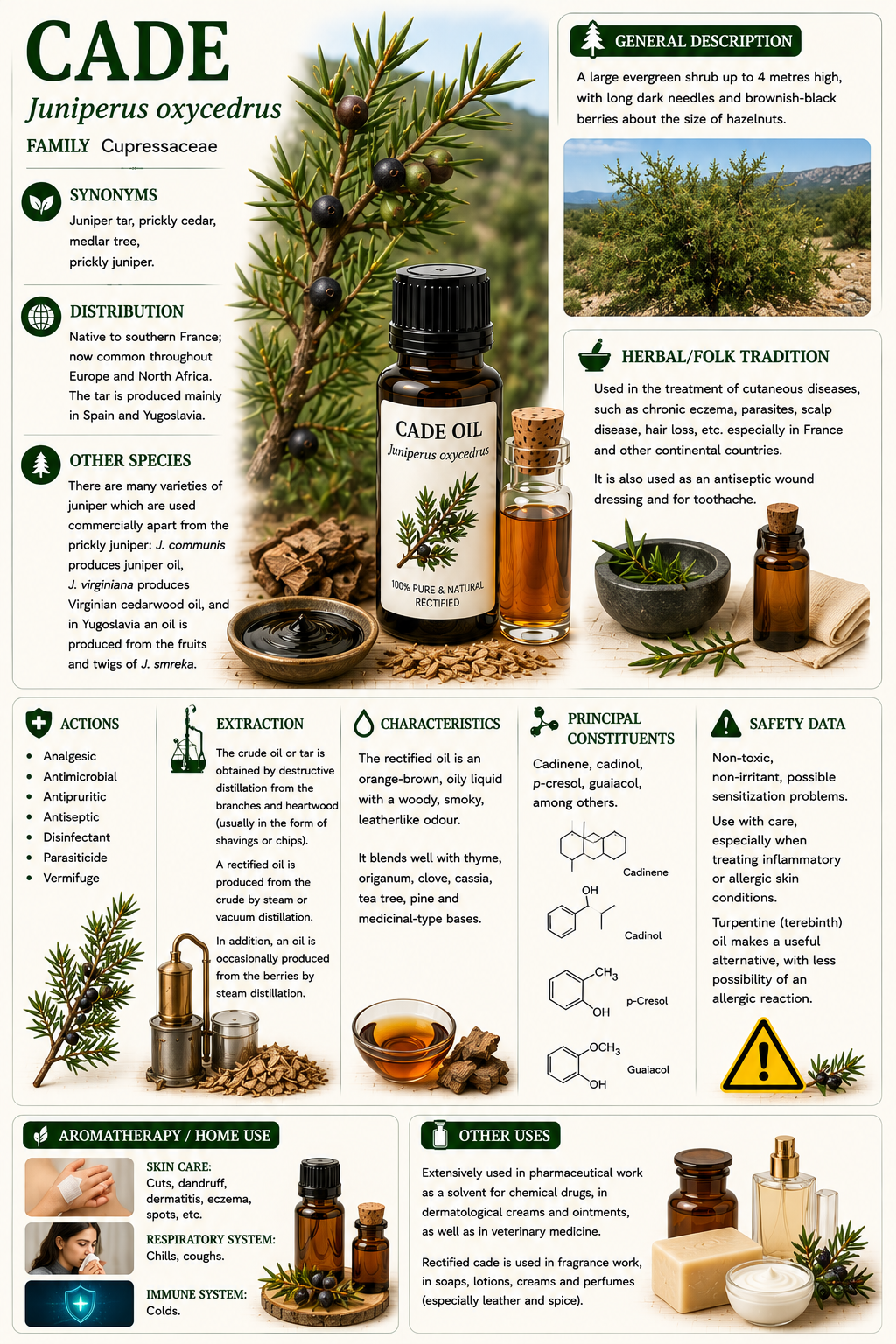
Essential Oil - Cade
Essential Oil – Cade
Botanical Information
Cade (Juniperus oxycedrus) belongs to the Cupressaceae family and is a large evergreen shrub that grows up to 4 metres in height. It is characterized by its long, dark green needle-like leaves and brownish-black berries about the size of hazelnuts. The plant is also known by several common names, including Juniper Tar, Prickly Cedar, Medlar Tree, and Prickly Juniper.
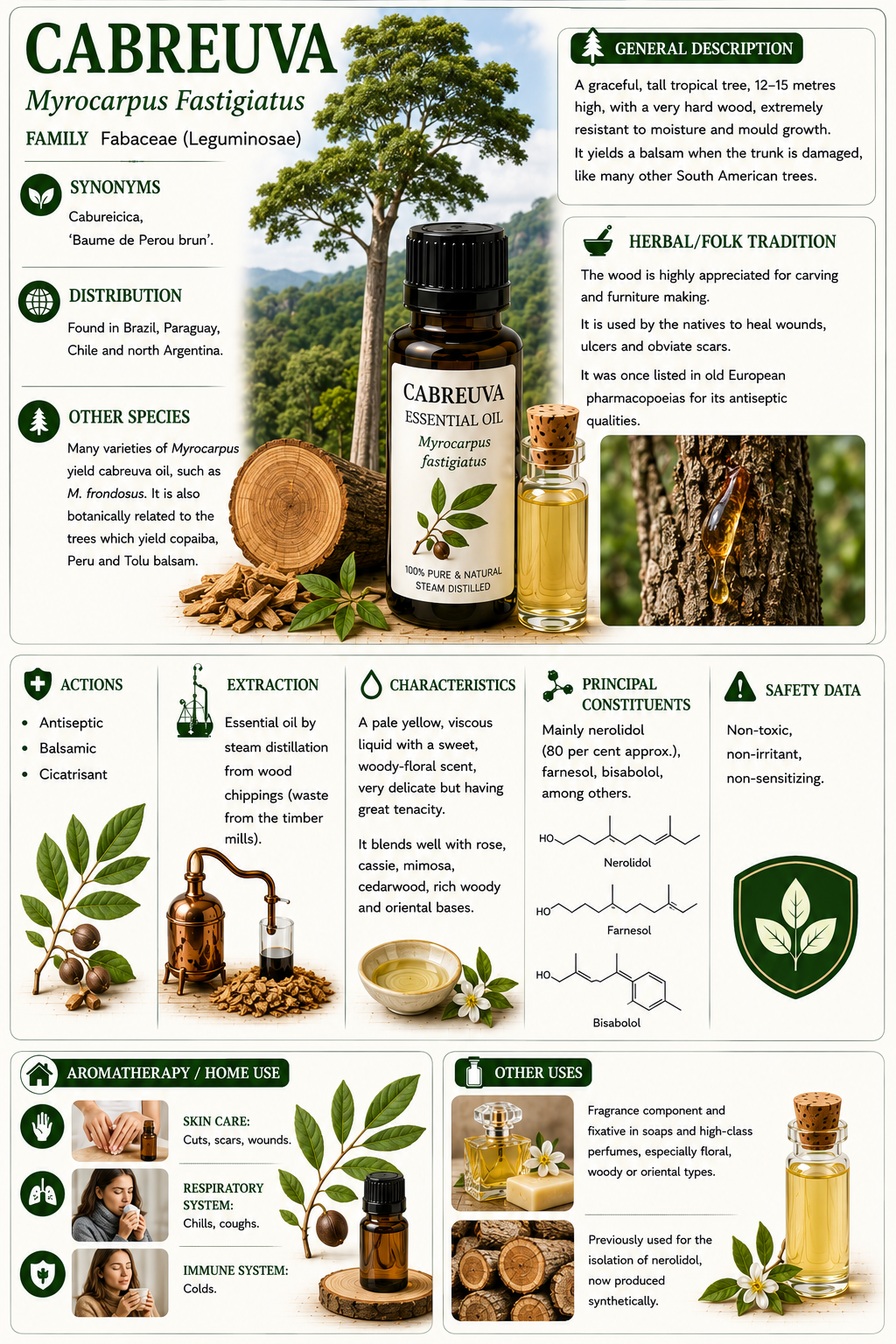
Essential Oil - Cabreuva
Essential Oil – Cabreuva
Botanical Information
Cabreuva (Myrocarpus fastigiatus) belongs to the Fabaceae (Leguminosae) family and is a graceful tropical tree that typically grows between 12 and 15 metres in height. It produces exceptionally hard, durable wood that is highly resistant to moisture and fungal growth. Like many South American trees, it exudes a fragrant balsam when the trunk is damaged. The tree is also known by the names Cabureicica and Baume de Pérou Brun.
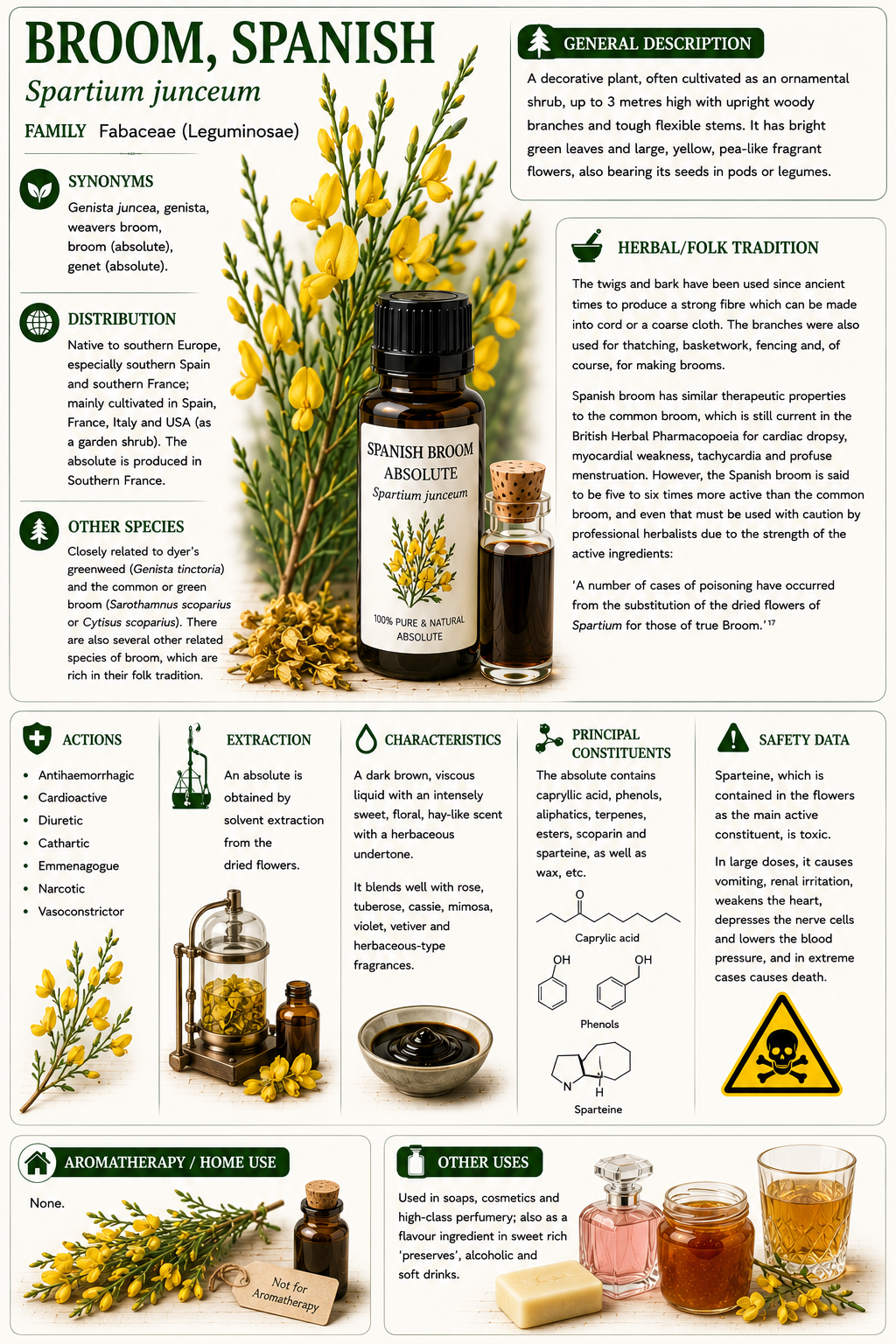
Essential Oil - Spanish Broom
Essential Oil – Spanish Broom
Botanical Information
Spanish Broom (Spartium junceum) belongs to the Fabaceae (Leguminosae) family and is an attractive ornamental shrub that grows up to 3 metres in height. It has upright woody branches, tough flexible stems, bright green leaves, and large, fragrant yellow flowers that resemble pea blossoms. Like other members of the legume family, it produces seeds enclosed in pods. The plant is also known by several synonyms, including Genista juncea, genista, weaver’s broom, broom absolute, and genet absolute.
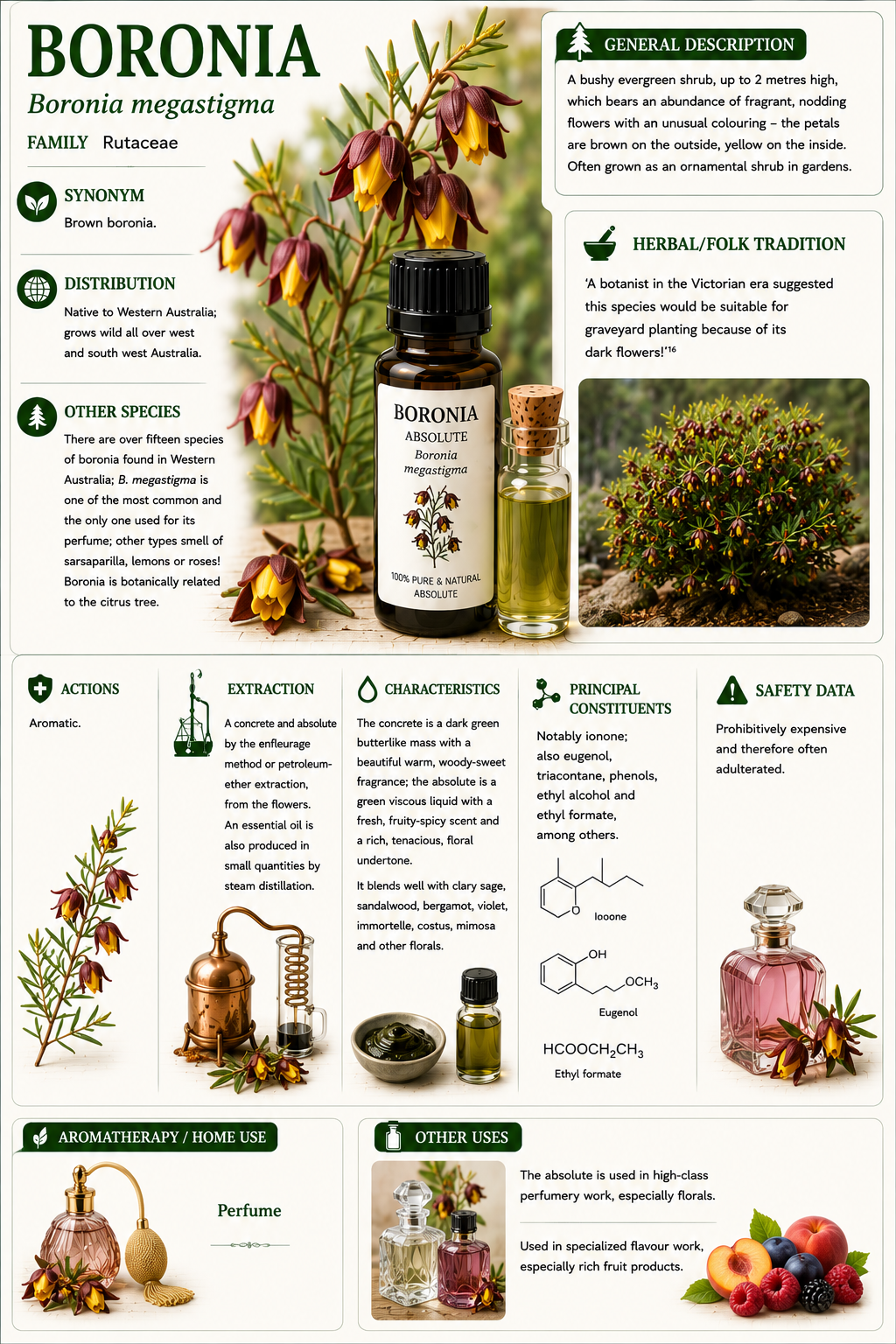
Essential Oil - Boronia
Essential Oil – Boronia
Botanical Information
Boronia (Boronia megastigma), also known as Brown Boronia, belongs to the Rutaceae family. It is a bushy evergreen shrub that grows up to 2 metres in height and is admired for its abundance of highly fragrant, nodding flowers. The blooms are distinctive, with brown outer petals and bright yellow inner petals, making the plant a popular ornamental shrub in gardens. Botanically, Boronia is closely related to the citrus family.
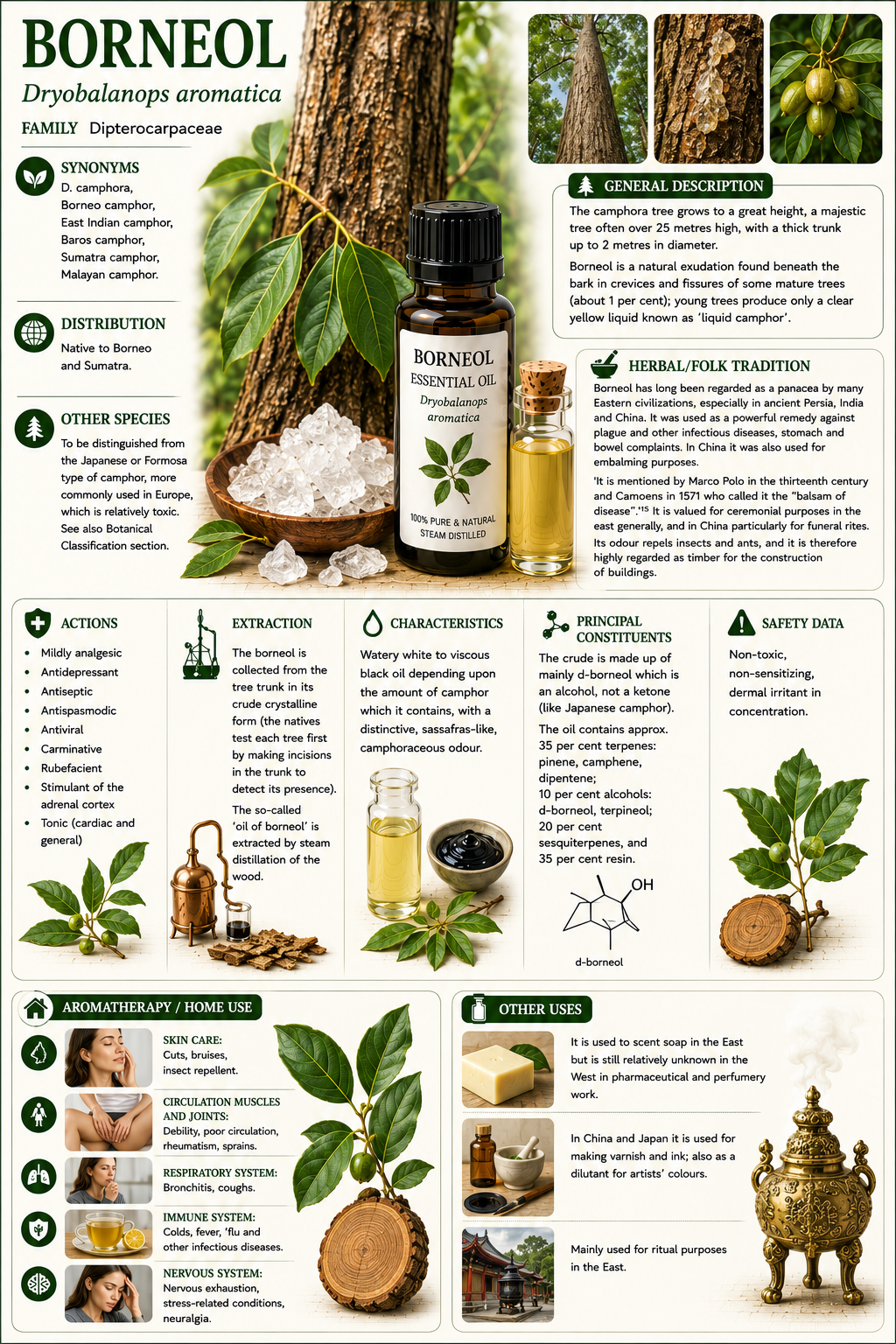
Essential Oil - Borneol
Essential Oil – Borneol
Botanical Information
Borneol (Dryobalanops aromatica) belongs to the Dipterocarpaceae family and is a towering tropical tree that often exceeds 25 metres in height, with a thick trunk reaching up to 2 metres in diameter. Borneol occurs naturally as a crystalline resin found beneath the bark in the crevices and fissures of mature trees, while younger trees produce only a clear yellow substance known as liquid camphor. The tree is also known by several names, including Dryobalanops camphora, Borneo camphor, East Indian camphor, Baros camphor, Sumatra camphor, and Malayan camphor.